UK Construction: Log Change Orders Before NEC’s Eight Week Deadline

A construction change order, known as a variation under JCT or a compensation event under NEC, must be recorded and notified immediately to protect your right to extra time or money. Miss the window and you risk losing entitlement entirely. The moment an instruction changes the work, write it down, notify the contract administrator per the contract terms, and keep every payment notice that follows.
TL;DR:
- NEC contractors generally have eight weeks from awareness to notify a compensation event, then three weeks to submit a quotation after instruction; missed deadlines can erase entitlement.
- Record each instruction the same day with its issuer, date, location, photos, annotated drawings, a register reference, and written client or contract administrator approval.
- A quotation should break out contract based labor, plant, and material rates, affected preliminaries, program delays, and supporting calculations rather than presenting a lump sum.
- If no timely payment notice or pay less notice is served, the applied sum generally becomes payable; adjudication usually decides unpaid claims within 28 days.
Table of Contents
- What counts as a change and what the different contracts call it
- When entitlement arises and the time bars that can kill a claim
- How to notify and document a change on site
- Valuing the change: quotations and what a robust submission includes
- Payment mechanics: the Construction Act, payment notices and the Scheme
- Resolving disputes: adjudication, mediation and what to prepare
- A practical checklist to get variations paid faster
- Why the small admin habits matter more than the big arguments
- Logging approvals and invoicing variations without the evening paperwork
- FAQ
- Sources
What counts as a change and what the different contracts call it
Every standard UK form has its own language for the same basic event: an instructed change to the scope, method, sequence or timing of works. JCT contracts call this a variation. NEC contracts call it a compensation event, and the definition stretches wider, covering employer risks like late access as well as instructed changes. FIDIC contracts refer to variations or engineer’s instructions.
The wording matters because it determines what triggers your entitlement and how quickly you must act. Common examples include:
- Additional or altered work not shown in the original drawings or specification.
- A change in the sequence, timing or method of carrying out the works.
- An omission of work originally included in the contract.
- Unforeseen ground or site conditions that were not reasonably anticipated.
Get the terminology right before you raise anything. Calling something a “variation” under an NEC contract when the mechanism actually requires a compensation event notice can cost you the claim on a technicality.
When entitlement arises and the time bars that can kill a claim
Entitlement to extra time or money does not arise automatically just because the work changed. It depends on an instruction, an employer default, or a genuinely unforeseen condition falling within the contract’s defined triggers. The real danger sits in the notification windows that follow.
- NEC contracts typically require the contractor to notify a compensation event within eight weeks of becoming aware of it, and to submit a quotation within three weeks of being instructed to do so.
- JCT contracts require applications and notices to follow the timings set out in the relevant clauses, often tied to the issue of an instruction or the next interim valuation.
- Miss these windows and, under NEC’s compensation events rules, you can lose entitlement outright or have the project manager assess the event on their own terms.
Pro Tip: Set a calendar reminder the day you spot a change, not the day you plan to raise it. Notification periods under NEC are counted from when you became aware, not when it was convenient to write it up.
How to notify and document a change on site
A verbal instruction from a site manager is worth very little once a dispute starts. What protects you is a contemporaneous record made at the time, not reconstructed weeks later from memory.
- Capture the who, what, when and where the moment the instruction is given, including the name of the person issuing it.
- Photograph the affected area and annotate drawings to show exactly what changed.
- Log the entry in a change register on the same day, with a reference number linking it to any instruction or correspondence.
- Get written or digital sign-off from the client or contract administrator rather than relying on an assumed agreement.
- Send confirmation by email or a traceable site-record system so there is a timestamped trail, and keep a backup copy off-site.
Pro Tip: A shared, running register beats a pile of separate emails. RICS guidance on change control treats this as a proactive, collaborative process rather than something you assemble after a dispute starts.
Valuing the change: quotations and what a robust submission includes
Once a change is agreed, how it gets valued depends on the contract. Common methods include remeasurement against agreed rates, a schedule of rates, dayworks for small or undefined work, adjustment of provisional sums, and a loss and expense claim where the change disrupts your programme.
A quotation that stands up to scrutiny should include:
- Labour, plant and material rates consistent with the original contract pricing.
- Preliminaries affected by the change, not just the direct cost of the work itself.
- The effect on programme, with a clear explanation of any delay caused.
- Supporting calculations rather than a single lump figure with no breakdown.
RICS valuation guidance sets out these approaches across JCT, NEC and FIDIC, and stresses that quotations need enough detail to be checked, not just accepted on trust. For larger or more complex variations, bringing in a quantity surveyor early is usually worth the fee, particularly where loss and expense is involved, since procedural missteps under JCT can bar recovery even when the underlying claim is sound.
Payment mechanics: the Construction Act, payment notices and the Scheme
UK law sets firm rules around how and when you get paid for variation work, and they apply regardless of what the contract tries to say. The Housing Grants, Construction and Regeneration Act 1996 requires every construction contract to contain an adequate payment mechanism and a final date for payment. Where a contract fails to provide one, the Scheme for Construction Contracts fills the gap automatically.
- Pay-when-paid clauses have no legal effect under the Act, regardless of what the contract says.
- A payment notice sets out the sum the paying party considers due and must be issued within the contractual timescale.
- A pay-less notice must be served if the paying party intends to pay less than the notified sum, or the full notified sum becomes payable.
- If neither notice is served on time, the amount applied for typically becomes the notified sum.
The right to adjudication under the 1996 Act gives contractors a fast-track route to recover unpaid sums, with decisions typically issued within 28 days. If payment is late and no valid notices have been served, you also have a statutory right to suspend performance until paid, provided you give the required notice first.
Resolving disputes: adjudication, mediation and what to prepare
Adjudication exists precisely because construction disputes need resolving fast, not in two years of litigation. The statutory process delivers an interim-binding decision, usually within 28 days, which keeps cash flowing while the parties sort out any final position later. It is the default route for unpaid variations and is widely used across the industry.
Mediation or straightforward negotiation often works better for relationship-sensitive disputes, particularly on smaller jobs where an ongoing working relationship with the client matters more than winning a point of principle. Arbitration or court litigation tends to suit only larger, more complex disputes where the sums justify the time and cost.
Before referring anything to adjudication, assemble:
- The relevant contract clauses covering variations and payment.
- Every notice and instruction related to the change, in date order.
- Your change register entries and supporting photographs or drawings.
- Quotations, valuations and all correspondence with the other party.
A well-organised pack, built from records kept throughout the job rather than reconstructed afterwards, is the single biggest factor in how smoothly an adjudication goes.
A practical checklist to get variations paid faster
Most payment disputes trace back to weak records, not weak contracts. Build these habits into every job:
- Capture the instruction in writing or by photo the moment it happens.
- Add it to your change register the same day, with a reference number.
- Get client or contract administrator sign-off before the work proceeds where possible.
- Attach photo evidence and any annotated drawings to the register entry.
- Prepare the quotation or interim claim in line with the contract’s own timescales, not your own convenience.
Pro Tip: Keep every record in a format you can export cleanly. An accountant or an adjudicator both want the same thing: a clear, chronological trail they can follow without chasing you for missing paperwork.
Why the small admin habits matter more than the big arguments

Most disputes we see on site do not start as legal arguments. They start as a verbal instruction nobody wrote down, followed weeks later by an argument about what was actually agreed. The tradespeople who get paid without a fight are rarely the ones with the strongest contract clauses. They are the ones who photographed the change, logged it the same day, and got a signature before carrying on.
That habit costs five minutes. The alternative costs weeks chasing payment or preparing for adjudication.
— Simon
Logging approvals and invoicing variations without the evening paperwork
We built our app around exactly this problem: the admin that follows a day on site, done from the van rather than at the kitchen table at 10pm. The mobile experience lets you snap photos against a job, record client approvals, and turn an agreed variation into an invoice.
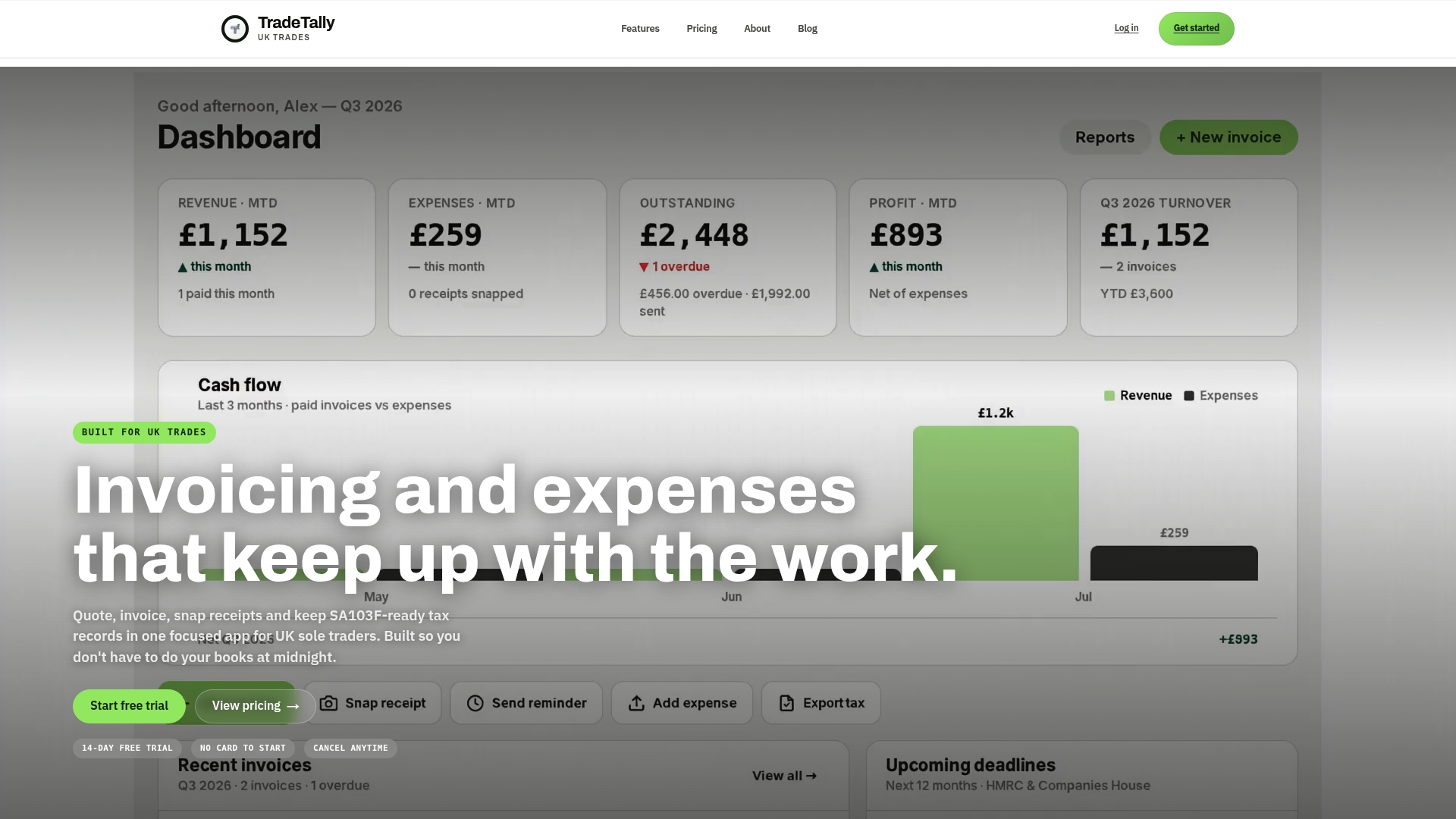
- Log a change and attach photo evidence in the same place you issue the quote.
- Keep a running record that exports cleanly for your accountant or, if it ever comes to it, an adjudicator.
- Issue payment-ready invoices the moment work is signed off, rather than waiting until the end of the job.
Our Starter plan is free for limited invoicing, and Professional unlocks unlimited invoices, receipts and tax exports for £12 per month or £120 per year. Have a look at TradeTally and see whether it fits how you already work.
FAQ
How do I write a change order for a construction job?
Record the instruction in writing with the date, the person who gave it, and exactly what changed, then notify the contract administrator within the timescale your contract sets out. Follow up with a priced quotation showing labour, materials, preliminaries and any programme effect, and keep the whole trail, including sign-off, in a dated change register.
What must a UK construction contract include?
A UK construction contract must contain an adequate payment mechanism and a final date for payment under the Housing Grants, Construction and Regeneration Act 1996. If it fails to provide one, the Scheme for Construction Contracts applies automatically to fill the gap.
What is the difference between JCT and NEC contracts?
JCT contracts use the term variations and tend to follow a more traditional instruction-and-valuation structure, while NEC contracts use compensation events, a broader category covering both instructed changes and certain employer risks, with strict notification and quotation windows. The practical difference for you is timing: NEC’s deadlines, such as an eight-week notification period, are tighter and less forgiving than typical JCT timescales.
Can I take legal action against a builder for breach of contract?
Yes, but for unpaid variations most contractors use adjudication first, since it is a statutory right under the 1996 Act and typically delivers a binding decision within 28 days. Court action remains an option for larger or more complex disputes, but it is slower and more costly than the adjudication route.
What happens if a payment notice or pay-less notice is missed?
If neither notice is served on time, the sum originally applied for generally becomes the notified sum and falls due for payment. If it remains unpaid past the final date for payment, you have a statutory right to suspend performance, provided you give the required notice first.
Sources
- Housing Grants, Construction and Regeneration Act 1996, section 110
- Change control and management guidance — RICS
- Valuing change — RICS guidance note
- Compensation events: an introduction for new NEC users — NEC Contracts
Recommended
Ready to sort your trade admin?
TradeTally gives UK sole traders invoicing, expenses, and SA103F-ready tax exports in one mobile-first app.
Start 14-day Pro trial →No card required