Claim £6 a week tax-free: 2026 use of home rules for UK tradespeople

Yes, you can likely claim something for working from home, but which route applies depends on your status. Employees can still claim via the £6 per week guideline for some situations, while sole traders can choose between simplified expenses flat rates of £10, £18 or £26 a month, or a proportion of actual costs. From 6 April 2026, the employee deduction route for unreimbursed costs disappears, so timing matters.
TL;DR:
- Employees will lose the unreimbursed homeworking deduction route after 6 April 2026, making employer reimbursements more important.
- Sole traders can still choose between simplified flat rates or actual cost claims, with simplified options increasing based on monthly hours worked.
- For employees, the weekly £6 tax-free reimbursement remains, but claiming through Self Assessment ends in 2026 unless reimbursed by the employer.
- Record-keeping should include monthly hours logs, receipts, and employer correspondence, maintained for at least five years.
- Running both simplified and actual costs options annually can ensure maximum claiming flexibility and accuracy.
Table of Contents
- 1. Who can claim: employees, contractors and sole traders
- 2. How much you can claim: flat rates and a worked example
- 3. How to claim: step-by-step routes and timing
- 4. Record-keeping and bookkeeping tips for sole traders
- 5. What changed in 2026 and what it means for you
- 6. Author perspective: what to do next
- How TradeTally helps you keep claims ready
- FAQ
- Sources
1. Who can claim: employees, contractors and sole traders
Your status decides which business valuation rules apply. Employees have historically been able to claim tax relief on additional household costs when required to work from home, either through an employer’s reimbursement or a deduction claimed through Self Assessment or gov.uk. That employee deduction route for unreimbursed costs ends on 6 April 2026.
Sole traders have more flexibility and keep their options. You can claim a business proportion of household running costs on your SA103F, or use simplified expenses if you work 25 or more hours a month from home.
Each route needs its own proof:
- Employees: a letter or policy confirming homeworking is required, plus any employer reimbursement records.
- Sole traders using simplified expenses: a monthly hours log showing business use.
- Sole traders using actual costs: utility bills, mortgage or rent statements, and a clear calculation of the business proportion.
2. How much you can claim: flat rates and a worked example
Employees working regularly at home can receive an exempt payment from their employer of £6 per week, with no receipts required when HMRC’s conditions are met. That is roughly £312 over a full tax year, paid free of Income Tax and National Insurance.
Sole traders using simplified expenses follow a different scale based on monthly hours worked from home, with banded flat rates that increase with hours worked. For example, working around 80 hours a month from a home office would qualify for the middle band rate, amounting to a few hundred pounds across a full year. If your actual costs (a fair proportion of heating, lighting and metered water) worked out at £240 a year, the actual-cost method would leave you better off. Simplified expenses is a straightforward option, but it is worth running both numbers each year since energy prices and working patterns shift.

3. How to claim: step-by-step routes and timing
The claiming process depends on whether you are employed or self-employed, and both routes come with their own paperwork trail.
For employees:
- Check with your employer first: a scale-rate reimbursement avoids tax altogether.
- If your employer will not reimburse you, and you still have an unreimbursed claim for a year before 6 April 2026, submit it through Self Assessment or the online gov.uk claim form if you do not normally file a return.
- Keep any correspondence confirming you were required to work from home.
For sole traders:
- Use HMRC’s simplified expenses checker to confirm you meet the 25-hour monthly threshold.
- Record your monthly hours and either apply the flat rate or calculate the actual business proportion on your SA103F, following the guidance in HS222.
- File through your Self Assessment return by the usual deadline.
Keep records for at least five years after the filing deadline, since HMRC can ask for evidence well after the fact. You can usually still amend or submit claims for the previous four tax years if you missed something, so check your records before assuming a past year is closed.
- Bills: keep originals or clear digital copies.
- Hours logs: update monthly, not retrospectively.
- Employer letters: keep a dated copy of any homeworking agreement.
4. Record-keeping and bookkeeping tips for sole traders
Good records turn a use of home claim from a guess into something you can defend. We find the tradespeople who get this right treat their hours log the way they treat a job sheet: filled in as they go, not reconstructed from memory months later.

If you use simplified expenses, link your monthly hours log directly to the corresponding utility bills so the two tell the same story. If you claim actual costs instead, keep every receipt and bank statement that supports your business proportion.
Some fixed costs can still be apportioned separately even if you use the flat rate for heating and lighting. Insurance and a demonstrable business-rate element are normally allowable, confirmed by HMRC’s internal guidance. Mortgage interest and council tax are typically excluded, since they would be payable whether or not you worked from home.
- Photograph receipts the day you receive them, not at the end of the month.
- Tag bills and costs to the relevant job where possible.
- Export your records into SA103F-ready format well before the filing deadline.
Pro Tip: Set up one folder per tax year with subfolders for hours logs, bills and correspondence, so if HMRC ever asks questions, you can hand over a clean trail in minutes rather than hours.
For more detail on building this habit, our guide to expense tracking for sole traders walks through a monthly routine that keeps you audit-ready without extra admin at year-end.
5. What changed in 2026 and what it means for you
From 6 April 2026, a deduction from earnings is no longer permitted for employees’ unreimbursed additional household expenses, under the government’s published removal notice. This closes the route that let homeworking employees claim relief directly through Self Assessment when their employer did not reimburse them.
Employer reimbursements are unaffected. The £6 per week guideline amount paid by an employer remains exempt from tax and National Insurance, so the practical shift is that responsibility moves towards employers rather than disappearing altogether.
If this affects you:
- Ask your employer whether they will introduce or continue a scale-rate reimbursement.
- Check whether you have an unclaimed deduction for a tax year before 6 April 2026 and file before it becomes too late.
- Sole traders are unaffected by this specific change and keep access to simplified expenses and actual-cost claims.
6. Author perspective: what to do next
Review your method every year rather than sticking with whatever you used last time. Hours change, energy prices change, and the better option often shifts with them. If you are employed, have the reimbursement conversation with your employer now, before the old deduction route closes for good. If you are a sole trader, your options stay open, but only if your records are clean enough to back them up.
— Simon
How TradeTally helps you keep claims ready
We designed our app around the paperwork that follows a day on the tools, not a desk job, which means use of home claims fit naturally into how you already work. Rather than reconstructing hours and bills at tax time, you log them as you go.
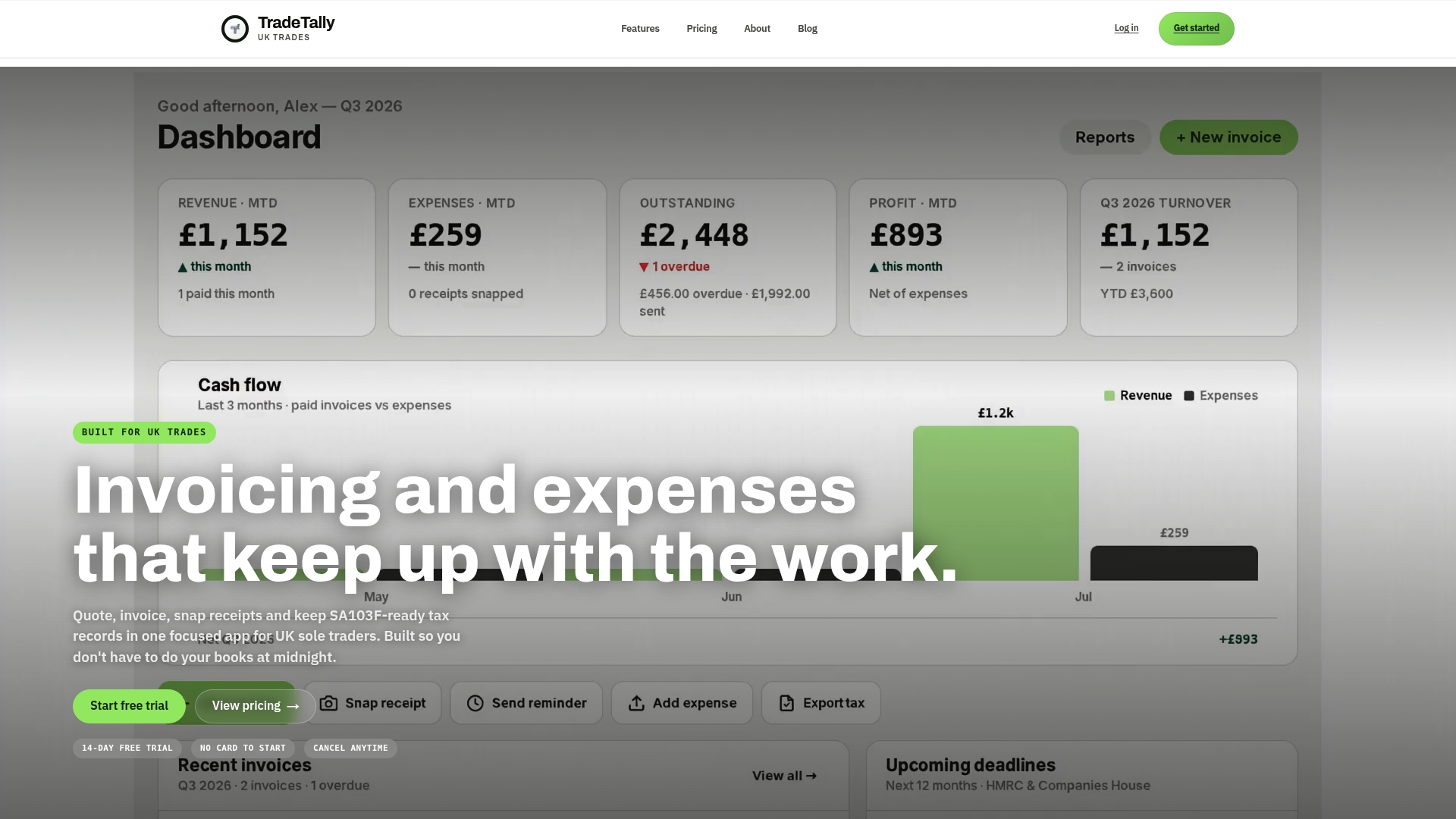
- Snap receipts from the van between jobs instead of stuffing them in the glovebox.
- Log hours worked from your home office alongside your job records.
- Export SA103F-ready figures at year-end, matched to the proportion method you have chosen.
That trail matters if HMRC ever asks questions, and it saves you the late-night scramble every January. Our SA103F export tool is built for exactly this handoff, and you can see how it fits your trade on the TradeTally plans page, including the free Starter tier and the Professional plan at £12 a month or £120 a year.
FAQ
How much can I claim for use of home as office in the UK?
Employees can receive an exempt £6 per week from their employer without needing receipts, under HMRC’s guideline rate. Sole traders can instead use simplified expenses flat rates of £10, £18 or £26 a month depending on hours worked, or calculate an actual-cost proportion.
Does HMRC know my savings?
This question relates to savings interest reporting rather than use of home claims, and is not something this guide covers. For use of home claims specifically, HMRC relies on the records and hours logs you submit rather than any automatic savings data.
How much can I claim per day for working from home?
HMRC’s guidance is framed in weekly and monthly terms rather than a daily rate. Employees can receive up to £6 a week from their employer tax-free, and sole traders use the monthly flat rates of £10, £18 or £26 depending on hours.
How much can I claim back for a home office?
The answer depends on whether you are employed or self-employed. Employees can get the £6 weekly guideline amount reimbursed by their employer, while sole traders choose between simplified expenses flat rates or a proportion of actual costs calculated on their SA103F.
Recommended
Ready to sort your trade admin?
TradeTally gives UK sole traders invoicing, expenses, and SA103F-ready tax exports in one mobile-first app.
Start 14-day Pro trial →No card required