What Expenses Can a Plumber Claim?
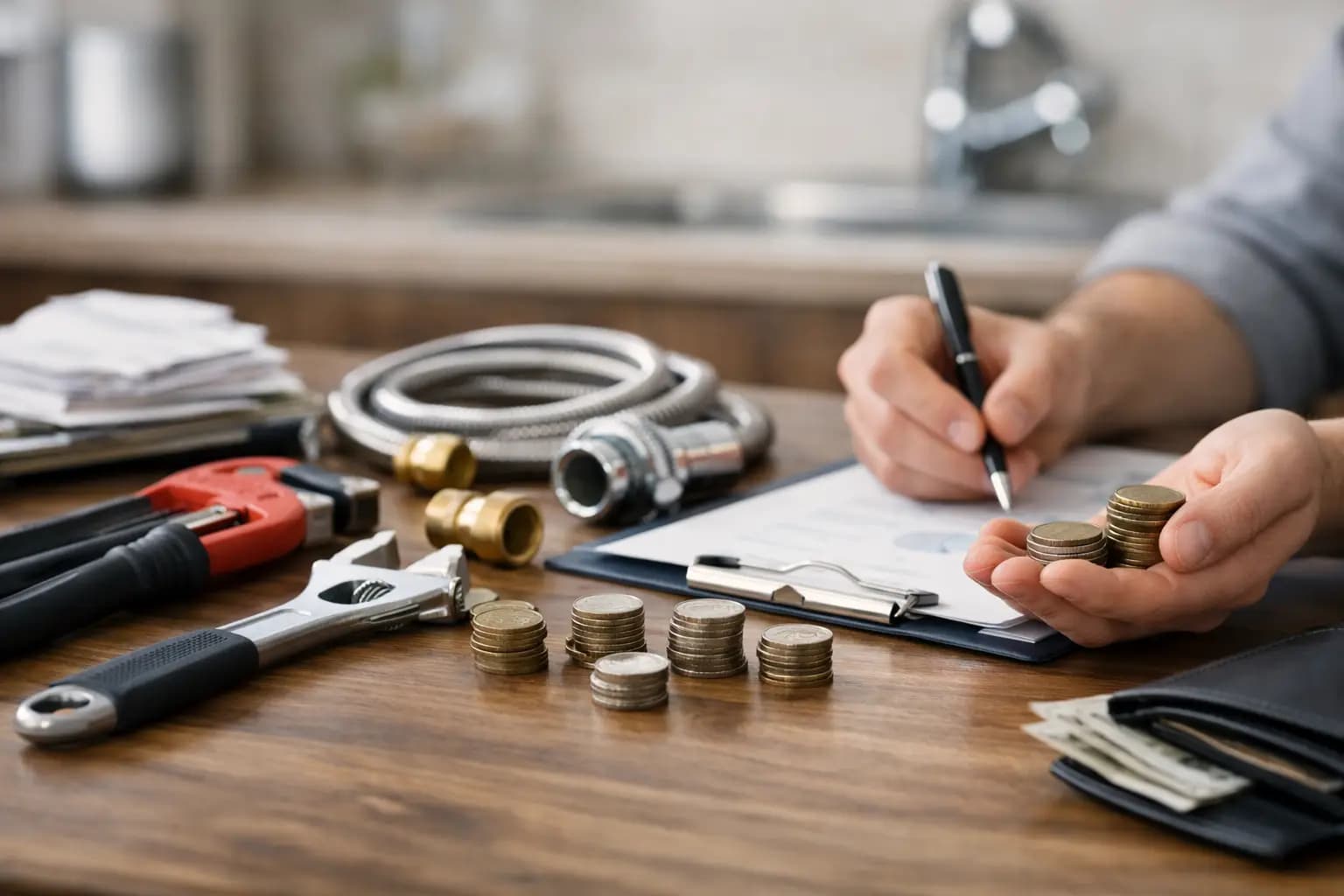
Finish a job, grab a coffee, pick up parts, pay for parking, top up fuel, replace a worn pipe cutter - then try remembering it all at tax return time. That is usually when sole traders start asking what expenses can a plumber claim, and which costs actually reduce the tax bill.
The short answer is this: if an expense is wholly and exclusively for your plumbing business, you can usually claim it. The longer answer is where most people get caught out, because real working life is messy. Vans get used for mixed journeys, mobiles are used for work and personal calls, and some costs are partly business, partly private. HMRC cares about the detail, not just the category.
What expenses can a plumber claim in the UK?
For a self-employed plumber in the UK, allowable expenses usually include tools, materials, van running costs, public liability insurance, work clothing, phone use, software, training, and office costs linked to the business. But every claim depends on how the expense is used.
That is the key point. Buying something does not make it claimable just because you are self-employed. You need a clear business reason and a record to back it up. If the cost has a personal element, you can normally only claim the business part.
Materials and stock used on jobs
This is one of the clearest areas. If you buy copper pipe, fittings, valves, sealant, waste pipe, fixings, or any other materials used for customer work, those are usually allowable business expenses.
The same goes for smaller consumables that disappear into the day-to-day running of jobs, such as PTFE tape, cleaning products used on site, dust sheets bought for work, and replacement blades or drill bits. If you buy items that are then recharged to the customer, keep a proper record of both the purchase and the invoice. It keeps your margins clearer and your books cleaner.
One thing to watch is personal use. If you are buying general household items at the same time as job materials, keep the business purchases separate where possible. A scrappy receipt with half Screwfix and half weekend DIY is harder to defend later.
Tools, equipment and work kit
Most plumbers spend regularly on tools. Pipe benders, press tools, testers, power tools, hand tools, ladders, torches and wet vacs are normally legitimate business costs if they are bought for work.
Smaller replacements are straightforward. Larger purchases can still be claimable, but the tax treatment may differ depending on whether the item counts as everyday running cost or capital expenditure. In plain terms, a big-ticket item bought to last may not always be handled in exactly the same way as a box of fittings. For many sole traders, the practical answer is the same - keep the receipt and record what it was for - but it is worth knowing that not every tool purchase is treated identically.
Protective gear also matters here. Safety boots, gloves, knee pads, goggles and hi-vis worn for work are generally allowable. Ordinary clothes are different.
Clothing plumbers can and cannot claim
This catches people out every year. You can usually claim protective clothing and specialist workwear. Think branded uniforms, overalls, steel toe cap boots and PPE.
You cannot usually claim for ordinary clothing, even if you only wear it on jobs. Plain jeans, hoodies or trainers are still everyday clothing in HMRC's eyes. It may feel unfair, but that is the usual rule.
If you have clothing washed or repaired specifically for work uniforms or protective wear, that can also be relevant. The safer approach is always to separate genuine workwear from normal clothes rather than trying to push grey areas.
Van, fuel and travel costs
For many plumbers, the van is the business. Fuel, insurance, repairs, servicing, tyres, MOTs, breakdown cover, parking and road charges can all potentially be claimed if they relate to business use.
The complication is personal travel. If the van is used privately as well, you can only claim the business-use proportion unless you are using the simplified expenses method where eligible. Travel to jobs, merchants, call-outs and site visits is generally business travel. Private trips are not.
Train fares, hotel stays and meals can also be allowable when you travel for business, such as working away on a job or attending a trade event. Daily lunch near home is not normally claimable just because you were working. HMRC draws a line between ordinary personal living costs and extra costs caused by business travel.
Mileage is another area where plumbers sometimes mix methods. You generally choose between claiming actual vehicle running costs or using simplified mileage rates, depending on the vehicle and circumstances. You cannot just swap between whatever gives the best number each week without understanding the rules.
Phone, internet and software
If customers ring your mobile, suppliers send confirmations by email, and quotes go out from your phone, part or all of those costs may be allowable. A dedicated business mobile is simplest because the full cost is easier to justify.
If you use one phone for work and personal use, claim only the business share. The same applies to home broadband if it is partly used for admin, invoicing or ordering materials.
Software is often overlooked, but it counts. Invoicing apps, expense trackers, job management tools and bookkeeping software used for the business are usually allowable. For a sole trader who wants less receipt chaos and faster self-assessment prep, that is a practical cost, not a luxury.
Insurance, fees and professional costs
Public liability insurance, tool insurance, van insurance for business use and other trade-related cover are usually allowable expenses. So are accountant fees, banking charges on a business account, and professional subscriptions that are directly tied to your work.
Training can be more nuanced. Refresher training or courses that maintain existing skills may be allowable. Training that gives you a completely new qualification or opens up a new trade area can be treated differently. If, for example, a course is helping you stay compliant in plumbing work you already do, that is usually easier to justify than a course taking you into an entirely new line of work.
Working from home and admin costs
Plumbers may not sit at a desk all day, but most still do admin from home - quotes, invoices, supplier emails, chasing payment, and sorting tax records late at night. If you work from home for the business, you may be able to claim a proportion of household costs or use HMRC simplified expenses.
You can also claim stationery, printer ink, postage and small office supplies if they are for the business. These are not usually the biggest savings, but they add up over a tax year.
The main thing is to be realistic. If you spend half an hour every few evenings doing paperwork at the kitchen table, the claim should reflect that level of use, not pretend you are running a full office from home.
Subcontractors and hired labour
If you pay another tradesperson or labourer to help on jobs, that cost is usually allowable as long as it is genuinely for the business and properly recorded. Keep invoices, payment records and notes on the work done.
This matters not just for tax, but for understanding job profitability. Plenty of sole traders know money is coming in but are less clear on what each job really cost once labour, materials and travel are included.
Entertainment and other costs you usually cannot claim
Not everything spent during work counts as an allowable expense. Client entertainment is a common example. Taking a customer out for a meal or drinks is not usually deductible.
Fines also do not count. Parking for a job may be allowable, but a parking fine is not. The same idea applies across the board - a legitimate business running cost is one thing, a penalty is another.
How to keep expense records without making it a second job
The best expense advice is boring and effective: record things as you go. Leave it for January and you will miss receipts, forget cash purchases and lose hours trying to rebuild the year.
A decent system should let you snap receipts on your phone, tag fuel, materials, tools and travel quickly, and keep everything in one place. That is the whole point of using a tool built for vans, sites and short evenings rather than wrestling with accounting software that feels like homework. TradeTally is designed around exactly that reality.
What HMRC really wants to see
HMRC does not expect perfection. It expects reasonable, accurate records. If you can show what you bought, when you bought it, and why it was for the business, you are in a much stronger position.
If a cost is partly personal, apportion it fairly. If something feels doubtful, treat it cautiously. And if you are ever unsure, the safest question to ask is simple: would I still have paid this if I were not running my plumbing business?
That one question will rule a lot in and a lot out - and it usually keeps your tax return far cleaner than trying to get clever at the last minute.
Ready to sort your trade admin?
TradeTally gives UK sole traders invoicing, expenses, and SA103F-ready tax exports in one mobile-first app.
Start 14-day Pro trial →No card required