£40–£100 + Interest: How to Claim Late Payment Interest in the UK
You have a statutory right to charge 8% plus the Bank of England base rate on overdue commercial invoices, backed by fixed compensation of £40 to £100 per invoice. The Late Payment of Commercial Debts (Interest) Act 1998 gives you this right automatically. Interest starts accruing the day after your invoice becomes overdue, and you can check every figure against the Office of the Small Business Commissioner’s own calculator.
TL;DR:
- Interest on overdue invoices is fixed at 8 percent plus the Bank of England base rate, which is set twice a year based on specific reference dates.
- Fixed compensation amounts range from 40 to 100 pounds per invoice, depending on the debt size, and can be claimed alongside actual recovery costs with proof.
- Interest accrues from the day after the payment due date, or after 30 days if no agreement exists, with a six-year limit to claim through court.
- Contract clauses that outright disallow statutory interest are only valid if they include a genuinely equivalent alternative remedy.
- Interest and compensation received are taxable income, and keeping detailed records is crucial for enforcement and tax compliance.
Table of Contents
- What is the statutory interest rate in the UK?
- How to calculate late payment interest UK: a worked example
- Fixed compensation for late payment: how much can you claim?
- When does late payment interest start, and how long do you have to claim?
- Can a contract remove your right to statutory interest?
- How to claim late payment interest and compensation: the practical steps
- Tools that take the maths and admin out of chasing debts
- Do you pay tax on late payment interest UK businesses receive?
- Applying the law practically for tradespeople
- Get paid faster with TradeTally’s invoicing tools
- Where to verify the rules yourself
- Sources
- FAQ
What is the statutory interest rate in the UK?
The statutory rate is fixed at 8% per annum plus the Bank of England base rate at the time your debt became late. This isn’t a guideline or a suggested figure. It’s a legal entitlement written into the Late Payment of Commercial Debts (Interest) Act 1998, and it applies automatically to business-to-business transactions unless the contract says otherwise.
The base rate element doesn’t float daily. The Late Payment of Commercial Debts (Rate of Interest) (No. 3) Order 2002 fixes it twice a year, using whatever base rate is in force on 30 June or 31 December as the reference for the following six months. So a debt that goes late in March uses the rate set on 31 December, even if the Bank of England moves rates again in February.
Two exceptions matter:
- If your contract already includes a “substantial remedy” for late payment (a clear, fair alternative rate and recovery process), that clause can override the statutory rate.
- Public authority debtors face a strict 30-day payment rule with far less scope to negotiate longer terms than private businesses.
How to calculate late payment interest UK: a worked example
Working out interest on late payments UK-style is simpler than most tradespeople expect, because it’s simple interest, not compound.
- Find the annual figure: invoice amount × statutory rate (8% + base rate).
- Convert to a daily rate: divide the annual figure by 365.
- Multiply by days overdue: daily rate × number of days late = total interest owed.
Pro Tip: Calculate on the VAT-inclusive total, not just the net figure. The Office of the Small Business Commissioner’s interest calculator explicitly recommends using the full invoice amount, including VAT, as your base for the calculation.
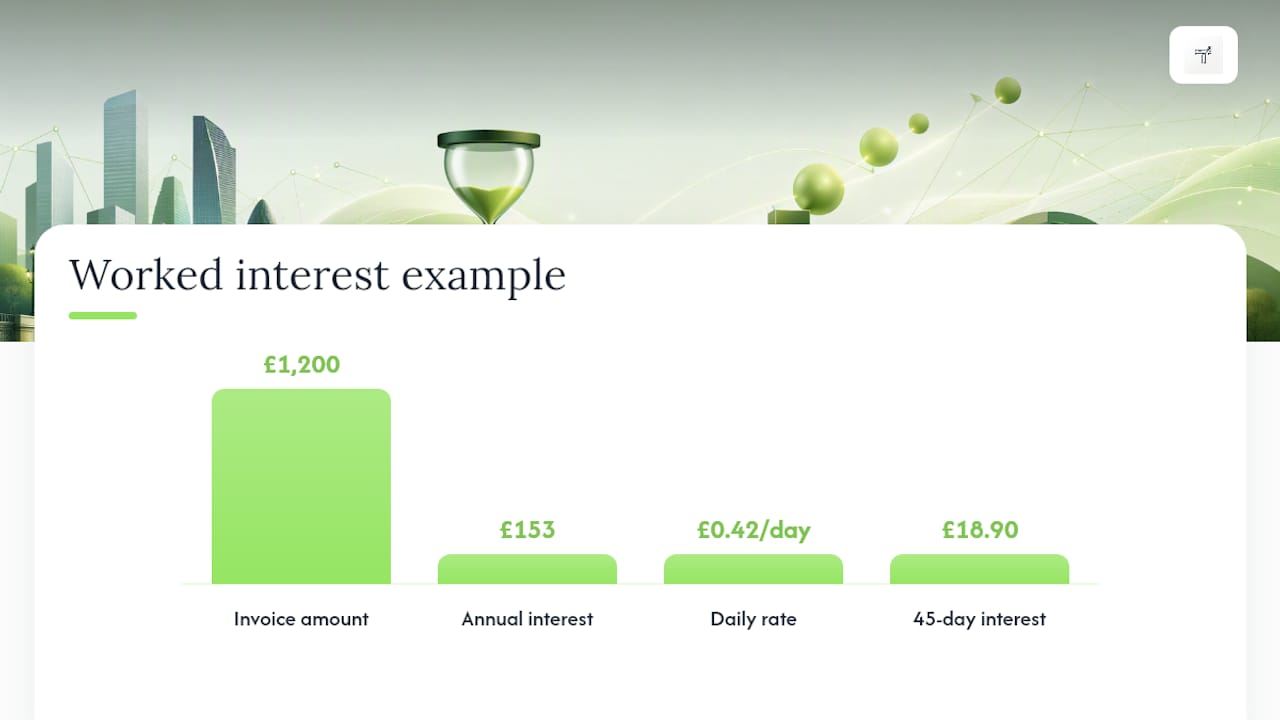
Say you’re owed £1,200 (including VAT) and the base rate sitting at 4.75% for that six-month window, giving a combined rate of 12.75%. The annual interest works out to £153. Divide by 365 and you get roughly 42 pence a day. If the invoice sat unpaid for 45 days past the due date, that’s around £18.90 in interest, on top of the fixed compensation you’re also entitled to. Round to the nearest penny and always keep your workings. If a client queries the number, running it back through the OSBC calculator gives you an independent cross-check in seconds.
Fixed compensation for late payment: how much can you claim?
Alongside interest, the law entitles you to a fixed, one-off compensation payment for every overdue invoice, scaled to the debt size:
- £40 for debts under £1,000
- £70 for debts between £1,000 and £9,999.99
- £100 for debts of £10,000 or more
These fixed-sum amounts apply per invoice, not per client, so five overdue invoices from the same customer earn five separate compensation payments.
If your actual costs of chasing the debt (admin time, postage, third-party recovery fees) exceed the fixed amount, you can claim the difference too, provided you can evidence those costs with receipts and records.
Pro Tip: Don’t guess at “reasonable” recovery costs. Courts scrutinise these claims closely, so keep a dated log of every call, letter, and hour spent chasing payment before you try to claim above the fixed sum.
When does late payment interest start, and how long do you have to claim?
Interest starts accruing the day after your payment due date, not the day the invoice was issued. If you and your customer never agreed a specific payment date, the law defaults to 30 days from whichever comes later: the invoice date or the delivery of goods and completion of services.
A few timing rules worth keeping straight:
- The base rate used for your calculation is whichever figure was fixed on the nearest 31 December or 30 June before your debt went late.
- That rate stays locked for the full six-month window, even if the Bank of England changes the base rate again before you get paid.
- You generally have up to six years from the date the debt became due to bring a claim for late payment and interest through the courts.
Can a contract remove your right to statutory interest?
Yes, but only if it replaces the statutory scheme with something genuinely equivalent, described in law as a “substantial remedy.” A contract clause that simply says “no interest applies to late payments” without offering a fair alternative typically won’t stand up.
Before signing new terms, check:
- Does the contract state a clear interest rate, and is it comparable to the statutory 8% plus base rate?
- Does it set out an actual recovery process, rather than just disclaiming your rights?
- Is there a token administration fee dressed up as compensation, rather than a genuine remedy?
If a clause looks vague or one-sided, get it reviewed before you agree to it. Statutory interest exists as your default protection, and it’s worth understanding exactly what you’d be giving up by contracting out of it.
How to claim late payment interest and compensation: the practical steps
Claiming what you’re owed follows a fairly predictable sequence, and doing it consistently removes most of the awkwardness tradespeople feel about chasing money.
- Confirm the due date and your entitlement. Check the original invoice terms or apply the 30-day default.
- Calculate interest and compensation. Use the daily-rate method above, then add the correct fixed-sum band.
- Issue a separate invoice. Interest and compensation aren’t added to the original invoice, they need their own invoice referencing the original invoice number and date.
- Chase in writing and log everything. Every email, call, and letter should be dated and saved.
- Escalate if needed. Use OSBC guidance for informal resolution, or consider a formal letter before action before heading to court.
Keep the original invoice, proof of delivery, your calculation workings, and every chase communication together. If the debtor disputes the claim later, that paper trail is what wins the argument.
Tools that take the maths and admin out of chasing debts
You don’t need to build a spreadsheet from scratch every time a customer runs late. TradeTally’s free invoice template lets you issue a clean, separate interest and compensation invoice referencing the original job. Pairing that with a proper late payment letter template means your written chase is consistent every single time, rather than reinvented under pressure.
- Use the invoice template to keep interest and compensation invoices properly formatted and referenced.
- Use letter templates to standardise your chase communications from first reminder to final notice.
- Cross-check VAT treatment and totals with TradeTally’s free calculators before you send anything.
Each tool slots into a different step of the claim process, so nothing gets missed when a debt drags on.
Do you pay tax on late payment interest UK businesses receive?
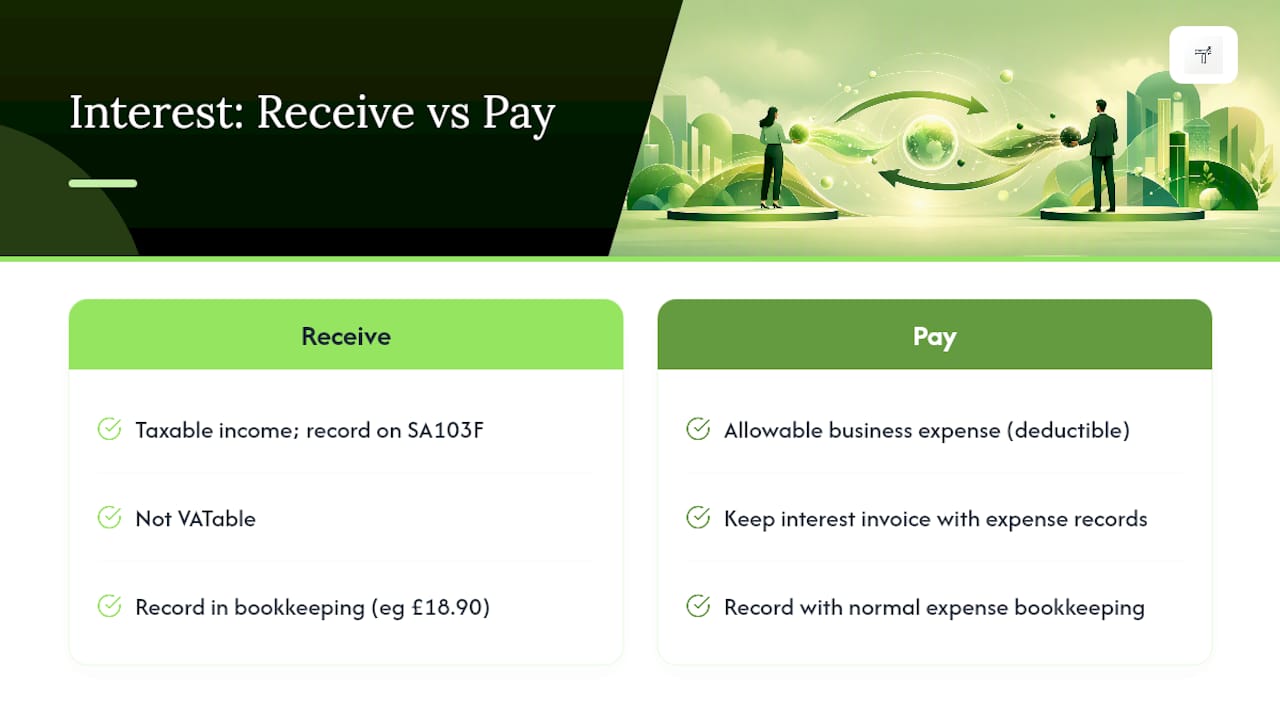
Yes. Statutory interest you receive from a late-paying customer counts as taxable income, and it needs to go through your books like any other business receipt. For a sole trader, that means recording it as income on your Self Assessment return, typically within the same accounting records you use for your main trading income, ready for the relevant boxes on your SA103F.
The fixed-sum compensation payments follow the same logic. Whether it’s £40, £70, or £100, HMRC treats it as income connected to your trade, not as a separate, tax-free windfall. It’s not VATable, as covered earlier, but it is taxable.
The flip side matters too. If you’re the one paying late and get hit with a statutory interest charge from a supplier, that interest is generally an allowable business expense, deductible against your profits in the same way as other finance costs. Keep the interest invoice you receive (or issue) filed with your normal expense records rather than treating it as an afterthought.
None of this changes your invoicing habits day to day, but it does mean interest and compensation need to land in your bookkeeping, not just your bank account. A payment that turns up three months late, with £18.90 in interest attached, is still £18.90 of taxable income that needs recording alongside the original invoice value.
Applying the law practically for tradespeople
Late payment rarely comes down to customers not knowing the rules. It comes down to tradespeople feeling awkward about enforcing them, or simply not having a system that makes enforcement automatic. The businesses that get paid fastest treat interest and compensation as a routine invoicing step, not an emotional confrontation. A clear calculation, a properly referenced invoice, and a dated paper trail do more to secure payment than a frustrated phone call ever will. Build the habit once, with a template and a calculator you trust, and chasing debt stops feeling personal.
— Simon
Get paid faster with TradeTally’s invoicing tools
This software is designed for UK sole traders who’d rather spend five minutes on an invoice than an evening untangling spreadsheets before a Self Assessment deadline. Where the steps above rely on you calculating interest, issuing a separate invoice, and keeping a clean record trail, TradeTally handles all three from your phone or van.
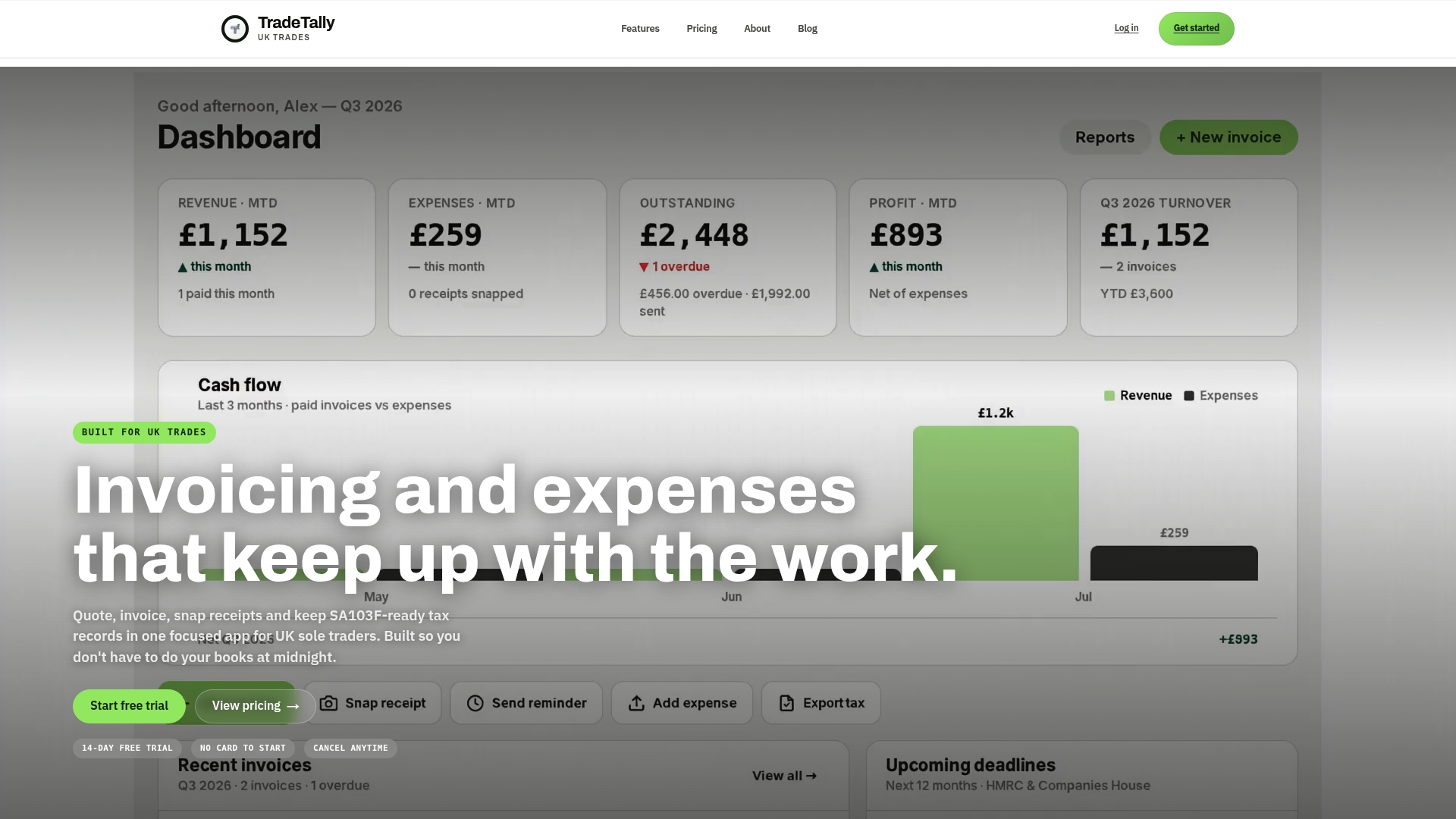
Create branded invoices instantly, snap receipts as they happen, and let the app organise everything into tax-ready records with automatic export when it’s time to file. If you’re a tradesperson chasing an overdue payment, the same system that raises your original invoice can help you issue the interest and compensation invoice too, correctly referenced and ready to send. Try TradeTally’s Self Assessment tax calculator to see how your records come together, or check the trade-specific invoicing pages to see how it fits your line of work. Getting paid on time starts with invoicing that doesn’t sit in a drawer until the weekend.
Where to verify the rules yourself
- Gov sets out the statutory rate and when it applies.
- The Legislation is the underlying legal text.
- The OSBC interest calculator lets you check your own figures.
- For formal escalation, PostRight’s letter before action service can help draft a legal notice before court proceedings.
Sources
FAQ
What are the new late payment rules in the UK?
There’s no new statutory rate: the 8% plus Bank of England base rate formula under the 1998 Act still applies to B2B debts, with the base rate refreshed every six months.
What is the acceptable late payment fee in the UK?
Fixed compensation is £40 for debts under £1,000, £70 for debts between £1,000 and £9,999, and £100 for debts of £10,000 or more, on top of statutory interest.
How do you work out late payment interest in the UK?
Multiply the invoice amount by the combined rate (8% plus base rate) for an annual figure, divide by 365 for a daily rate, then multiply by the number of days overdue. The OSBC calculator can cross-check your workings, and TradeTally’s invoice template helps you issue the result correctly.
What happens if payment is 30 days late?
If no due date was agreed, 30 days is the default payment term, and statutory interest starts accruing from day 31, the day after that default due date passes.
Do you have to pay tax on late payment interest received?
Yes, statutory interest and fixed compensation both count as taxable income and should be recorded through your normal Self Assessment bookkeeping, typically feeding into the same records used for your SA103F.
Recommended
Ready to sort your trade admin?
TradeTally gives UK sole traders invoicing, expenses, and SA103F-ready tax exports in one mobile-first app.
Start 14-day free trial →