Cash Flow Visibility Software for Sole Traders
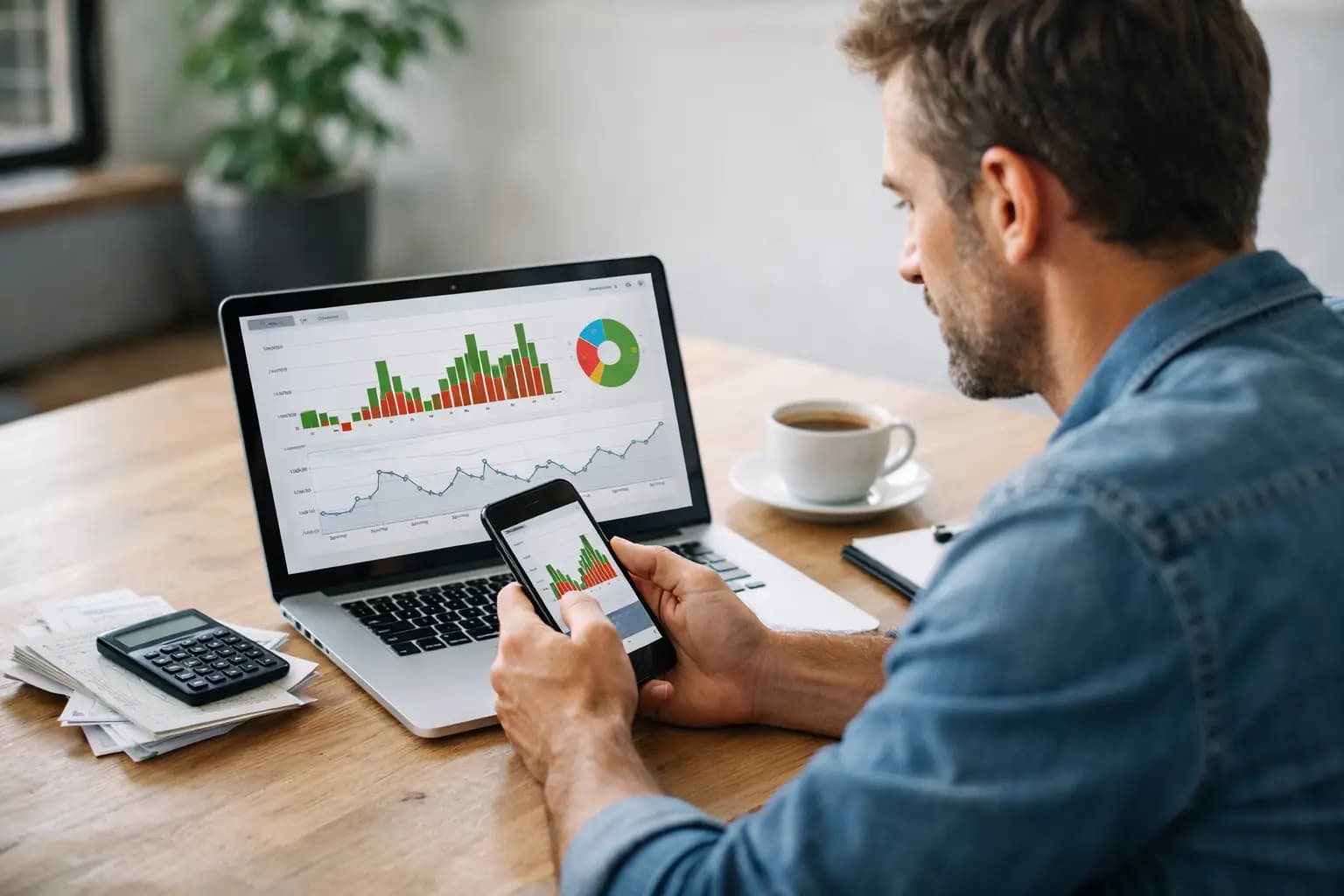
If you have ever finished a full day on site, looked at your bank balance, and still not been sure what is actually due in or going out, you already know why cash flow visibility software matters. For sole traders, the problem is rarely a lack of work. It is the gap between doing the job, sending the invoice, getting paid, and keeping track of what the business can really afford this week.
That gap causes more stress than most people admit. Materials need buying before the next job. Fuel goes out daily. A customer says they will pay Friday, but Friday comes and goes. Then tax sits in the background waiting for its turn. You can be busy and still feel skint, which is exactly why seeing your cash position clearly matters more than another spreadsheet you never open.
What cash flow visibility software should actually do
Good cash flow visibility software is not about fancy charts for the sake of it. It should show you, quickly and clearly, what has been invoiced, what is overdue, what has been paid, what expenses are building up, and what that means for the money you have available.
For tradespeople, that usually comes down to a few practical questions. Which invoices still need sending? Who owes me money? How much have I spent this month on fuel, materials, tools, and subcontractors? What is likely to leave the account before the next few payments land?
If the software cannot answer those questions without making you feel like you need an accounting qualification, it is probably the wrong fit. Most sole traders do not need a finance department in an app. They need a clear view of the moving parts that affect day-to-day cash.
Why visibility matters more than basic bookkeeping
Bookkeeping tells you what happened. Visibility helps you act before cash gets tight.
That difference is a big one. If you only update records when you get a quiet Sunday afternoon, you are always looking backwards. By then, the problem has usually arrived. An invoice is already late. Expenses have already stacked up. You have already committed to buying materials for the next job.
With better visibility, you spot the pressure earlier. You can chase a late invoice before it turns into a two-week delay. You can hold off on a non-essential spend. You can see whether a busy month is actually cash healthy or just packed with unpaid work.
That matters even more for sole traders because there is less room for error. A bigger firm might ride out slow payment with reserves or a credit line. A one-person business often feels it straight away.
The signs your current setup is not good enough
A lot of sole traders are technically tracking money, but not in a way that helps. If your system is spread across a banking app, paper receipts, text messages, memory, and a few notes on your phone, you are not really seeing your cash flow. You are piecing it together.
The usual warning signs are familiar. Invoices go out days after the job instead of on the same day. You are not sure which customers need chasing without checking several places. Receipts stay in the van until the end of the month. You know money is coming in, but you cannot say how much or when. Tax gets treated like a future problem.
None of that means you are bad at running a business. It usually means your admin setup was never built for the way you actually work.
Cash flow visibility software for tradespeople works differently
Software made for desk-based businesses often assumes you have time to sit down, reconcile everything neatly, and learn a load of bookkeeping terms you do not care about. That is where a lot of tools lose sole traders in the trades.
Cash flow visibility software for a plumber, electrician or builder needs to work in the gaps of the day. In the van. Between jobs. At the merchant. In ten minutes before tea. It should let you send the invoice there and then, snap the receipt when you get it, and see your invoice pipeline without hunting around.
That is a very different job from full accounting software. There is overlap, of course. You still need records, expenses, and tax data. But the best tools for sole traders strip the process back to what keeps cash moving and admin under control.
What to look for before you pay for anything
Start with invoicing, because that is where cash flow starts. If it takes too long to create and send an invoice, you will delay it. Delayed invoices mean delayed payment. The software should make branded invoices quick to send from your phone, not something you put off until later.
Next, look at how it handles invoice status. You want to see draft, sent, paid, and overdue at a glance. That one view can tell you more about your short-term cash position than a pile of disconnected records.
Expense tracking matters too, especially if money is going out in small amounts every day. Fuel, parking, materials, fixings, bits from the merchant, replacement tools - these add up fast. If receipt capture is awkward, you will skip it, which means your numbers are never quite right.
Finally, think about tax. Strictly speaking, tax prep is not the same as cash flow visibility. But in real life, they are tied together. If you never set aside enough because your records are patchy, you get hit later. A tool that keeps expense records tidy and helps you prepare self-assessment data gives a much more honest picture of what your cash is really doing.
The trade-off: simple software versus full accounting platforms
There is no single right answer here. It depends on how your business runs.
If you have staff, complex VAT needs, stock, payroll, and a bookkeeper working across everything, a broader accounting platform may make sense. You might need more depth, more integrations, and more reporting.
But many sole traders end up paying for that complexity without using most of it. They need invoices, expenses, a clear view of what is owed, and records that make tax time less painful. In that case, simpler software often does a better job because it gets used properly.
That is the real test. The best system is not the one with the longest feature list. It is the one you will actually keep up to date when you are tired, dirty, and trying to get home.
Why mobile-first matters for cash flow visibility software
This point gets missed by people who think admin happens in an office. For most tradespeople, admin happens wherever there is a spare minute.
Mobile-first software changes the timing. You can invoice when the job is done rather than days later. You can capture an expense at the counter rather than losing the receipt in the glovebox. You can check who owes you money while waiting for a collection at the supplier.
That speed is not just convenient. It improves the quality of the information. Records are fresher, invoices go sooner, and payment chasing starts earlier. Over a month or a year, that has a direct effect on cash.
A product like TradeTally makes sense in that context because it is built for vans, sites, and short evenings, not accounting exams. That does not mean every sole trader needs the same tool. It means the design of the software should match the reality of the work.
The outcome you are really buying
Most people do not go looking for cash flow visibility software because they love admin. They want fewer surprises.
They want to know whether this week is tight before the card gets declined at the merchant. They want less time spent sorting receipts at night. They want invoices out faster, overdue payments spotted sooner, and tax records that do not turn January into a headache.
That is what good software should deliver - not perfection, but clarity. Enough to make better decisions, keep work moving, and stop your business finances feeling like guesswork.
If your current setup leaves you busy, paid late, and unsure where the money is going, the fix is usually not to work harder on admin. It is to use a tool that shows the right numbers at the right time, in a way you will actually use.
Ready to sort your trade admin?
TradeTally gives UK sole traders invoicing, expenses, and SA103F-ready tax exports in one mobile-first app.
Start 14-day Pro trial →No card required