Best sole trader app for UK tradespeople?
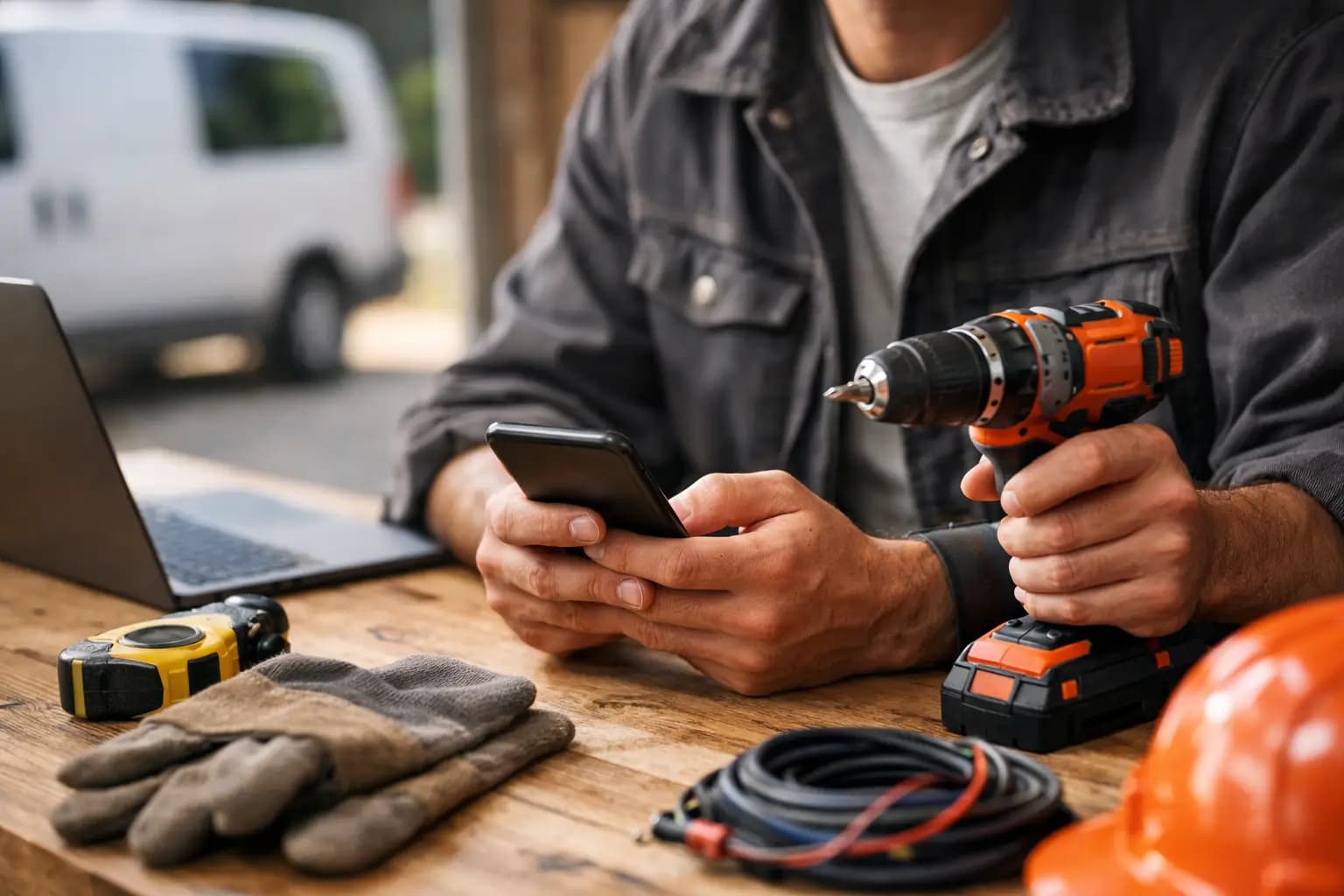
Half nine at night, boots still by the door, and you are chasing receipts from the van while trying to remember which customer still owes for last Thursday. That is the moment a good sole trader app earns its keep.
For most tradespeople, admin does not fail because the work is hard. It fails because it lands at the wrong time. You are on site all day, answering calls between jobs, grabbing materials, pricing up the next one and trying to get home at a sensible hour. If your app expects desk time, spreadsheet skills or a full accounting setup, it is already asking too much.
What a sole trader app should actually do
A sole trader app should help you get paid faster, keep records tidy and make tax time less painful. That sounds obvious, but plenty of software misses the point. It offers reports you will never use, menus buried three layers deep and features aimed at finance teams rather than one person running jobs from a van.
For a UK sole trader in the trades, the basics matter most. You need to send a proper invoice quickly, capture expenses before receipts vanish, see what is paid and unpaid, and keep enough order in your numbers to handle self-assessment properly. Anything beyond that is only useful if it does not slow you down.
That is the trade-off worth remembering. More features do not automatically mean better software. In many cases, they mean more screens, more setup and more time spent learning a system you never wanted in the first place.
Why generic accounting software often gets in the way
A lot of sole traders start with whatever they have heard of. Usually that means broad accounting platforms built to serve everyone from freelancers to limited companies. They can do a lot, but that is not the same as being right for a plumber, roofer or builder.
If your day is mostly spent on site, the problem is not a lack of accounting power. It is lack of speed. You need to raise an invoice from your phone when a job is done. You need to snap a receipt while standing at the merchants. You need to check who owes you money without opening a laptop after dinner.
This is where generic software often starts to feel heavy. It may include payroll, multi-user permissions, complex chart setups or accounting language that makes a simple task feel bigger than it is. For some businesses, that makes sense. For a sole trader who just wants to stay on top of cash flow and keep records straight, it can be overkill.
The best sole trader app fits the way tradespeople work
The best sole trader app is not the one with the longest feature list. It is the one you will actually use when you are busy, tired or covered in dust.
That usually means mobile-first design. Not a desktop platform that also has an app, but something that works properly on a phone. Buttons should be clear. Key actions should be fast. You should be able to create a quote, convert it to an invoice, log an expense and check outstanding payments without hunting around.
It also means the software should reflect how jobs move in real life. A tradesperson might send a quote, book the work, invoice in stages, buy materials along the way and then chase payment at the end. If the app cannot handle that flow simply, it is going to create friction where you least need it.
Fast invoicing matters more than people think
Delayed invoicing is one of the easiest ways to damage cash flow. Not because the work is not being done, but because the paperwork slips. A day becomes three days. Three days becomes next week. Then payment terms start later than they should and the whole cycle drags out.
A good app cuts that delay. If you can send a branded invoice from your phone before you leave the drive, you shorten the gap between finishing the job and getting paid. That makes a real difference over a month, especially when materials, fuel and labour costs are already eating into margin.
Expense capture needs to happen on the spot
Nobody enjoys sorting a pile of faded receipts at the end of January. The easiest expense system is the one that happens there and then. Snap the receipt, log it, move on.
This matters for two reasons. First, you get a clearer picture of what jobs are actually costing you. Second, your tax records are cleaner when self-assessment comes round. Missed expenses can mean paying more tax than necessary. Messy records can mean a long evening trying to piece together what happened months ago.
Tax prep should be simpler, not scarier
Most sole traders are not asking for advanced accounting. They want enough structure to keep HMRC records straight and avoid a last-minute scramble. That means income and expenses stored properly, with exports that help when it is time to complete self-assessment.
The wording here matters. Help with self-assessment is not the same as turning your phone into an accounting department. For most tradespeople, the right app should reduce panic, not introduce jargon.
How to choose a sole trader app without wasting time
Start with your actual week, not a software demo. Think about when admin usually gets done and where it breaks down. If invoices go out late, prioritise speed and ease of sending. If receipts are always missing, prioritise capture and expense tracking. If tax time is a mess, look closely at how records are organised and exported.
Price matters too, but only in context. A cheaper app is not better if it creates missed invoices or poor records. Equally, paying for a large accounting package does not make sense if you are only using a fraction of it. Most sole traders need something affordable, but also purpose-built enough to save time straight away.
There is also a difference between software that can be learned eventually and software that feels obvious on day one. If the trial leaves you wondering where basic tasks live, that is usually a warning sign. Good tools for sole traders should feel simple because they are focused, not because they are stripped bare.
What UK tradespeople should look for first
For a plumber, electrician, carpenter or decorator, the strongest setup usually includes quoting, invoicing, expense capture, payment visibility and tax-ready records in one place. Not because every feature is glamorous, but because these are the jobs that keep the business moving.
Being able to see unpaid invoices at a glance is especially useful. Cash flow issues often come from poor visibility as much as late payers. If you cannot quickly tell what is outstanding, who has paid and what is overdue, you are working blind.
That is why trade-focused software often makes more sense than broad bookkeeping platforms. It is built for vans, sites, and short evenings. It assumes you need answers quickly. It does not treat every user like they are studying for accounting exams.
A product like TradeTally is built around that reality. The focus is on the essentials sole trader tradespeople actually need - fast branded invoicing, receipt capture, expense tracking, quote handling and self-assessment export - without the weight and cost of software aimed at bigger or more complex businesses.
When a simple app is not enough
There are cases where a sole trader app on its own may not cover everything. If you are growing into a larger operation, taking on office staff, moving into payroll or turning into a limited company with more complex reporting needs, your software requirements may change.
That does not mean starting simple was the wrong call. It means software should match the business you have now, while leaving room to review later. Plenty of sole traders buy systems built for future complexity and end up carrying that burden long before they need it.
The better approach is practical. Choose a tool that solves today’s admin problems properly. If the business evolves, reassess when the need is real.
The right app will not make admin enjoyable. That is not the point. It should make it quick enough that it stops stealing your evenings. If you are a sole trader in the trades, that is usually the difference that matters most.
Ready to sort your trade admin?
TradeTally gives UK sole traders invoicing, expenses, and SA103F-ready tax exports in one mobile-first app.
Start 14-day Pro trial →No card required