4 steps for UK trades to avoid VAT and CIS errors on deposit invoices
A deposit invoice is a numbered bill requesting part payment before work starts. Show your details and the customer’s, state clearly that it’s a deposit, split labour and materials if CIS applies, and add VAT separately if you’re VAT-registered. Get the tax point wrong or the split wrong, and a simple deposit can turn into a compliance headache.
TL;DR:
- VAT on deposit invoices is due at the tax point, which is when the invoice is issued or payment is received, whichever occurs first.
- CIS deductions must be applied only to the labor portion of deposits, with materials identified separately to avoid disputes.
- Clear, specific wording that states the deposit is non-refundable or refundable, tied to genuine costs, helps prevent customer disputes and unintentional overcharges.
- Including the deposit amount as a separate line item and offsetting it on the final invoice ensures clarity and prevents client confusion about payments.
- Proper record-keeping of receipts and consistent adherence to invoicing protocols minimize compliance issues and facilitate smooth tax reporting.
Table of Contents
- What must be on a deposit invoice for UK tradespeople?
- How does VAT apply to deposit invoices?
- How does CIS change a deposit invoice?
- What makes a deposit term fair under CMA guidance?
- Deposit invoice wording and template examples
- How to issue and reconcile a deposit invoice
- Quick checklist and common deposit invoice mistakes
- Why the paperwork matters more than the plumbing
- Get your deposit invoices sorted with TradeTally
- Sources
- FAQ
What must be on a deposit invoice for UK tradespeople?
A deposit invoice follows the same legal baseline as any other invoice, plus a few extras specific to part payments. GOV.UK’s invoicing rules set out the mandatory fields every invoice needs, deposit or not.
Your checklist should include:
- A unique invoice number, sequential and never reused
- Your business name, address and contact details, plus the customer’s name and address
- The invoice date and either the supply date or a reference to the job or quote number
- A clear description of the goods or services covered
- The deposit amount, with VAT shown separately if you’re VAT-registered
- A plain statement that this is a deposit or part payment, not the full invoice value
- A labour and materials breakdown where CIS applies
- The payment due date and a note that a final invoice will follow
Miss the “this is a deposit” line and customers sometimes assume they’ve paid in full. That single sentence heads off a surprising number of arguments before they start.
How does VAT apply to deposit invoices?
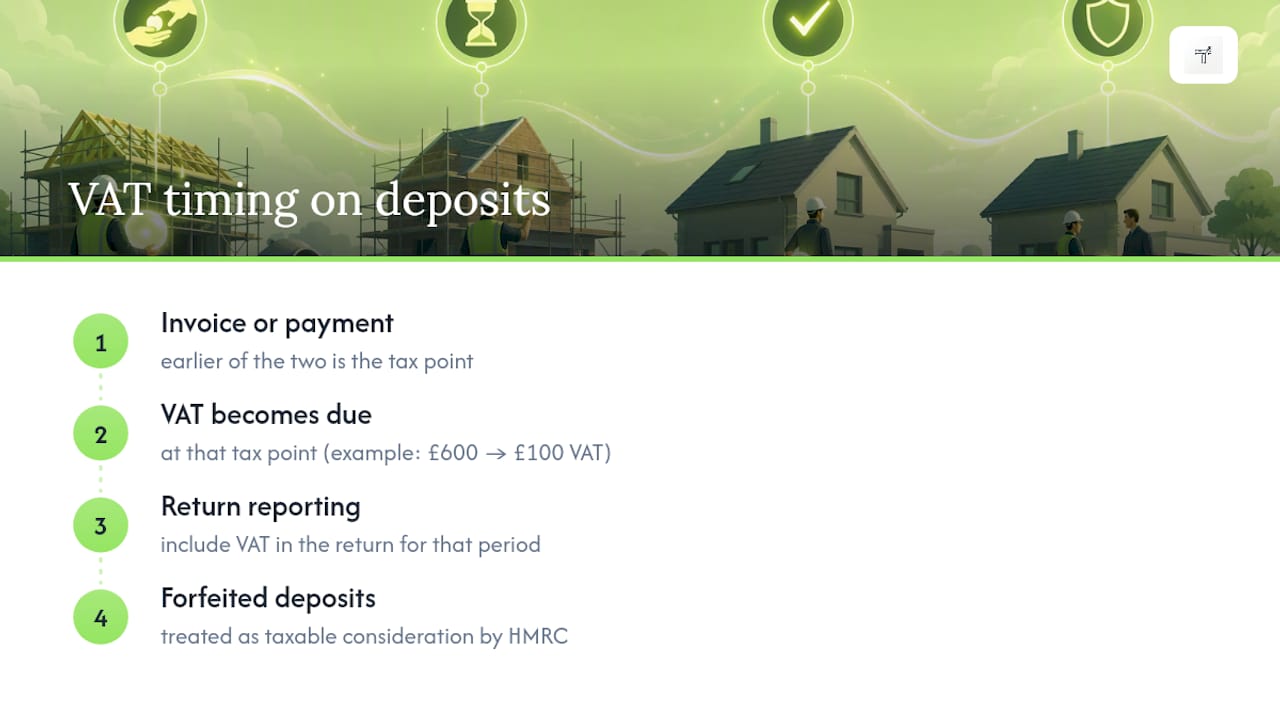
VAT becomes due at the tax point: either when you issue the deposit invoice or when you receive payment, whichever happens first. That’s the rule under HMRC’s VAT guidance on instalments, deposits and credit sales, and it catches out a fair number of sole traders who assume VAT only applies once the job is finished.
You must include the VAT on the deposit in the return covering the period when that tax point falls, not the period when the job wraps up.
Statistic callout: Since 1 March 2019, Revenue and Customs brief 13 has required VAT on retained payments for unfulfilled supplies too. If a customer cancels and forfeits their deposit, HMRC generally treats that retained amount as taxable consideration, not a VAT-free penalty.
Say you invoice a £600 deposit on 10 June, VAT-registered at 20%. Your tax point is 10 June, £100 VAT is due on that invoice, and it goes in the return covering that quarter, regardless of when the job finishes. A VAT calculator makes that split quick to check before you send anything.
How does CIS change a deposit invoice?
Under the Construction Industry Scheme, contractors must apply deductions only to the labour element of any payment to a subcontractor, deposits included. Materials are exempt, but only if you’ve identified them separately.
Contractors have three ongoing duties here:
- Verify the subcontractor’s CIS status before paying anything
- Apply the correct deduction rate based on that status
- Report payments, including deposits, in the monthly CIS return
Vague, unsplit figures are one of the most common causes of CIS disputes.
Pro Tip: Keep a short email or written note confirming what the deposit covers before work starts. If a dispute ever reaches a deduction disagreement, that record settles it in minutes rather than weeks.
Software built for CIS invoicing handles this split automatically, which removes the guesswork on every job.
What makes a deposit term fair under CMA guidance?
The Competition and Markets Authority expects deposit clauses to reflect genuine loss, not to punish the customer for changing their mind. Its guidance on writing a fair contract treats an excessive retention clause as potentially unfair, even if the customer signed it.
Three things to get right in your terms:
- State what happens to the deposit if the customer cancels: full refund, partial refund after material costs, or forfeiture only past a set point
- Give a clear notice period for cancellation and tie any retained amount to actual costs already incurred (ordered materials, booked labour)
- Keep receipts for any materials bought against the deposit, so a forfeiture claim is provable, not just assumed
A refundable deposit suits smaller, low-risk jobs. A non-refundable one makes more sense once you’ve committed to bespoke materials or blocked out a week of labour, but the amount should still track the real risk, not just round up to a tidy figure.
Deposit invoice wording and template examples
Wording matters more than most tradespeople expect. Vague deposit lines invite questions; specific ones don’t.
A few line items that work well:
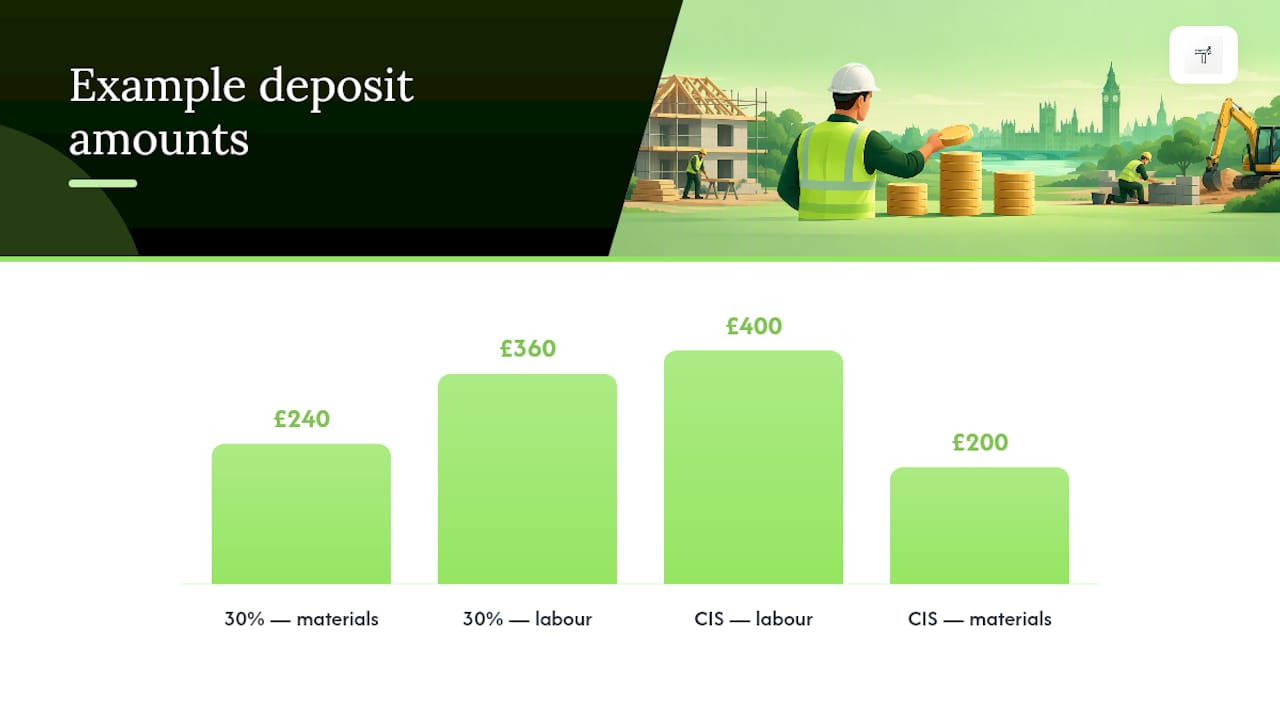
- “Deposit (30%): materials £240, labour £360 — remaining balance due on completion”
- “Non-refundable deposit to secure booking date, applied against final invoice total”
- “CIS deposit: labour £400 (deduction applies), materials £200 (no deduction)”
Add a short note covering payment due date, refund policy, and confirmation that a final invoice will follow once the job is complete. For a B2B customer, reference the purchase order number if one exists. For a CIS subcontractor deposit, state the deduction rate applied and show it as a line item, not buried in the total.
On the final invoice, offset the deposit clearly: “Total job value £1,200, less deposit paid £360, balance due £840.” That single line prevents the “didn’t I already pay some of this?” phone call.
TradeTally’s free invoice template for sole traders covers all three variants, including the CIS labour/material split, ready to fill in on site.
How to issue and reconcile a deposit invoice
Getting the paperwork trail right matters as much as getting the wording right. Four steps keep everything reconcilable come tax return time:
- Raise the deposit invoice (or pro-forma) when the booking is confirmed, and note the tax point date for VAT purposes
- Tag the payment against that invoice in your bank records the moment it lands, and save a receipt or photo
- Issue the final invoice once work is complete, offset the deposit against the total, and adjust your VAT return if the final figure differs
- Include the deposit payment in your CIS monthly return for the period it was paid, not the period the job finished
Miss step 4 and your CIS reporting falls out of step with when HMRC expects the deduction recorded, which is one of the easier ways to trigger a query.
Quick checklist and common deposit invoice mistakes
Before you send a deposit invoice, run through this:
- Unique invoice number, full supplier and customer details, clear description
- VAT shown separately and tax point correctly dated
- Labour and materials split if CIS applies
- Plain refund or forfeiture terms, matched to genuine cost
- Receipts kept for any materials bought against the deposit
The mistakes that come up again and again: no labour/material breakdown (fix: add line items every time), vague refund wording (fix: a two-line clause beats a paragraph nobody reads), and treating the deposit as separate from the final invoice instead of a running balance against it.
Why the paperwork matters more than the plumbing
Most tradespeople treat deposit invoices as an afterthought, a quick text message with a bank transfer link. That’s backwards. A deposit invoice is where disputes actually get decided, months later, when nobody remembers what was agreed verbally on the doorstep.
The conventional wisdom says deposits are simple: ask for money upfront, get on with the job. What that misses is the paper trail is the whole point. A vague deposit invoice doesn’t just risk a VAT query, it hands a difficult customer an argument. A specific one, split by labour and materials with clear refund terms, removes that argument before it starts.
This admin often happens at the worst time, usually from a van at 6pm. Mobile invoicing and template wording turn a five-minute job into a thirty-second one, and the SA103F export means the deposit you raised in June doesn’t need reconstructing in January.
— Simon
Get your deposit invoices sorted with TradeTally
There are tools designed to help tradespeople manage branded invoicing, receipt snapping, and tax-ready records in a mobile-first app usable from the van.
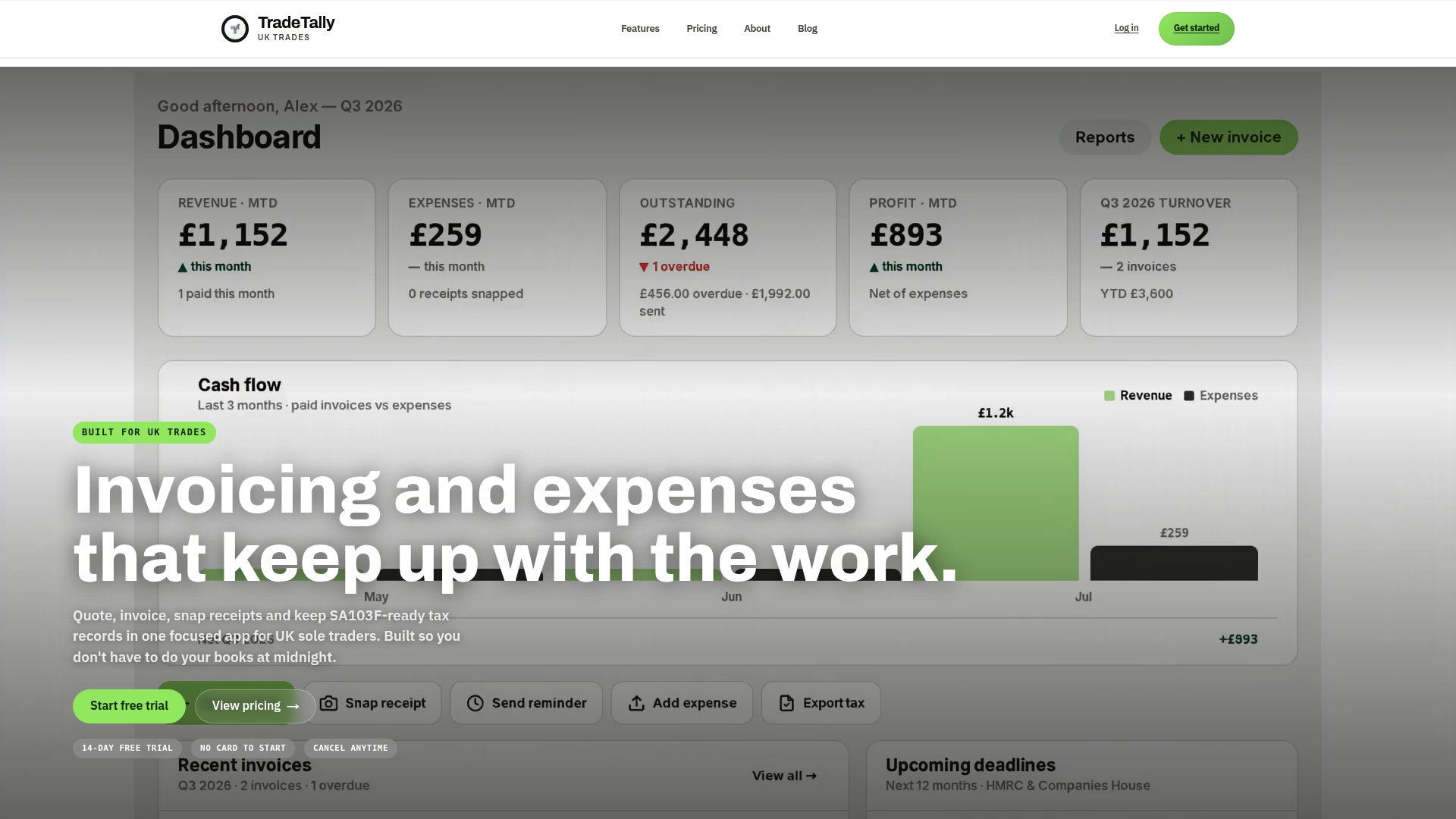
For deposit invoices specifically, that means templates with the labour and materials split already built in, CIS deduction handling, and a live profit dashboard that shows exactly what’s outstanding once the deposit’s banked. Everything exports straight into SA103F format for Self Assessment, so nothing needs rebuilding at tax time.
Start free with the Starter plan, or move straight to Professional at £12 per month (or £120 billed annually) for unlimited invoices, receipts, and tax exports. Try the free sole trader invoice template first if you just want to see the wording in action.
FAQ
What legally needs to be on a UK invoice?
Every invoice needs a unique number, your business details and the customer’s, an invoice date, a description of the work, and the amount charged, with VAT shown separately if you’re VAT-registered. GOV.UK’s invoicing guidance sets out the full list, and deposit invoices need all the same fields plus a note confirming it’s a part payment.
How do I show a deposit on an invoice?
State the deposit amount as a clear line item, note that it’s a deposit or part payment rather than the full job value, and split labour from materials if CIS applies.
What are standard UK invoice payment terms?
Most tradespeople use a range of payment terms from the invoice date, though there’s no single legal standard for private jobs. Commercial customers who pay late can be charged statutory interest and fixed compensation under the Late Payment of Commercial Debts Act, ranging from £40 to £100 depending on the debt size.
How do freelancers and sole traders invoice for a deposit in the UK?
Raise a numbered deposit invoice as soon as the booking is confirmed, including your details, the customer’s, the deposit amount, and VAT if registered. Tools like TradeTally’s invoice templates build this structure in automatically, so the labour/materials split and VAT lines are ready before you’ve left the driveway.
Do I need to charge VAT on a deposit before the job starts?
Yes, if you’re VAT-registered, VAT becomes due at whichever comes first, the invoice date or the payment date, under HMRC’s rules on deposits. That applies even if the job itself doesn’t start for weeks.
Recommended
Ready to sort your trade admin?
TradeTally gives UK sole traders invoicing, expenses, and SA103F-ready tax exports in one mobile-first app.
Start 14-day Pro trial →No card required