Sole Trader Invoicing Guide for UK Trades
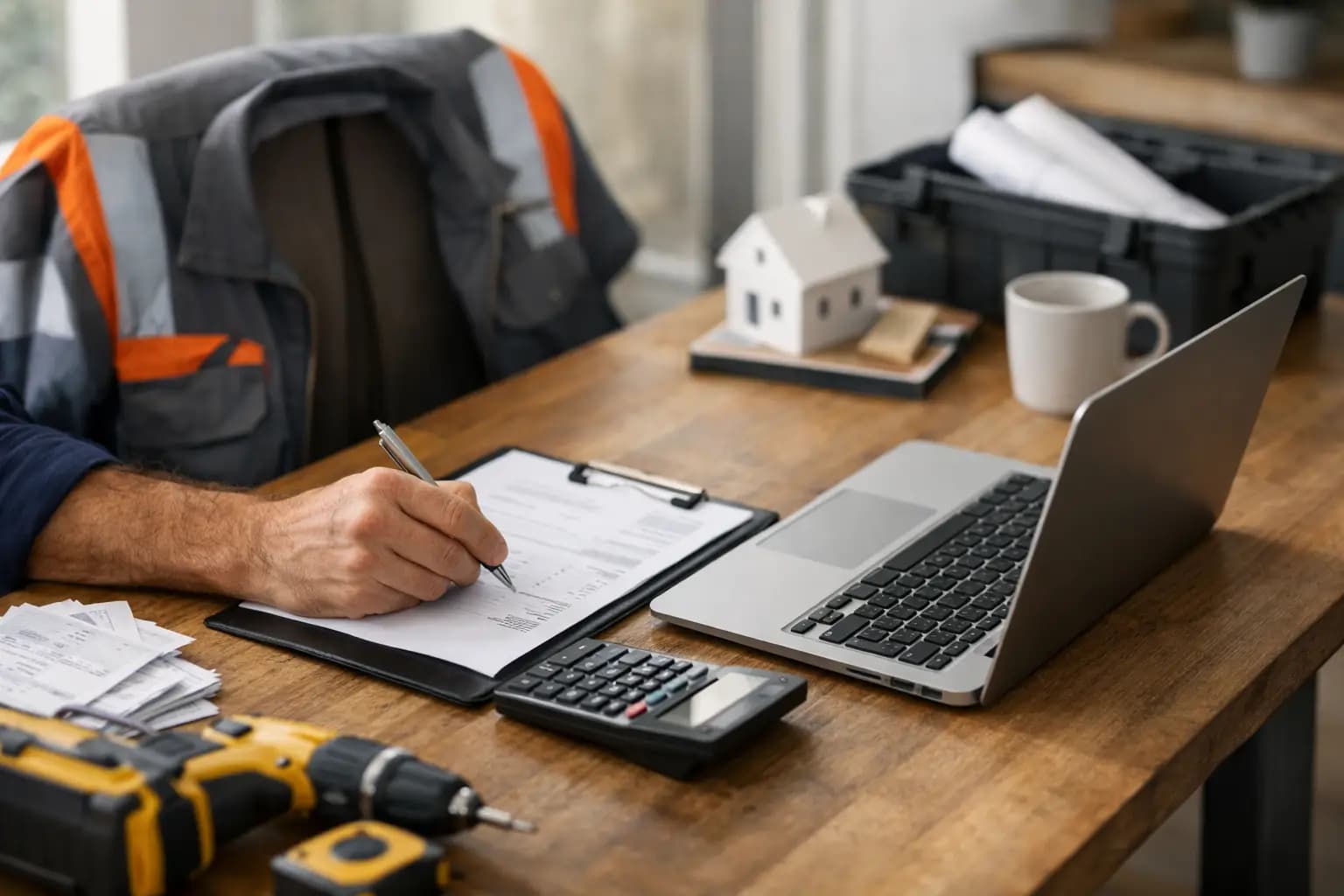
You finish the job, pack the van, answer two missed calls, grab materials for tomorrow, then remember you still have not sent the invoice. That is where cash flow starts slipping. A good sole trader invoicing guide is not about paperwork for the sake of it. It is about getting paid on time, keeping records straight, and cutting down the late-night admin that always seems to land after a long day on site.
For sole trader tradespeople, invoicing needs to be fast, clear, and easy to do from a phone. If it takes too long, it gets pushed back. If it is vague, clients question it. If it is messy, tax time becomes a headache. The aim is simple: send professional invoices quickly, make it easy for customers to pay, and keep a proper trail for your records.
What a sole trader invoice must include
At the basic level, your invoice needs enough information for the customer to understand what they are paying for and for you to keep proper business records. If you are a UK sole trader, that usually means your name or trading name, your business address, and contact details. You also need a unique invoice number, the invoice date, and a clear description of the work completed.
You should show the amount due, the payment terms, and the payment method. If you charge for labour and materials separately, spell that out. If you agreed a fixed price for the whole job, keep it simple and state that clearly. Customers are far less likely to delay payment when the invoice is easy to read and matches what was discussed.
If you are VAT registered, include your VAT number and show VAT properly. If you are not VAT registered, do not add VAT to the invoice. That sounds obvious, but plenty of sole traders create confusion by using templates that include tax fields they do not need.
Why tradespeople get invoicing wrong
Most invoicing problems do not come from not knowing the rules. They come from timing, workload, and the reality of site-based work. You are not sat behind a desk with an accounts team. You are in muddy boots, between jobs, dealing with suppliers, or trying to get home before the traffic gets worse.
That is why the biggest mistake is delay. Leave invoices until Friday night or the end of the month and a few things happen. Details get forgotten, small extras get missed, and the customer has had more time to mentally move on from the job. Send the invoice while the work is still fresh and you usually get fewer questions and faster payment.
The next common issue is being too vague. Writing “building work completed” or “electrical works” may save 20 seconds, but it often leads to awkward messages asking what exactly was done. A short, plain description works better. For example, “Supplied and fitted kitchen sink tap” or “First fix wiring to rear extension”. Clear beats clever every time.
How to structure invoices so clients pay faster
A practical sole trader invoicing guide should focus on what actually gets results. The best invoice is not the fanciest one. It is the one that tells the customer exactly what they owe, when they need to pay, and how to do it.
Start with a clean layout. Put your business details at the top, followed by the customer details, invoice number, and date. Then list the work in a way that mirrors the quote or verbal agreement as closely as possible. If you quoted for labour and materials separately, keep that same structure on the invoice. If the job changed halfway through, note the extra work plainly so there are no surprises.
Your payment terms matter more than many sole traders realise. “Due on receipt” can work for some jobs, especially smaller domestic work, but it depends on your customer base. If you mainly invoice commercial clients, they may work to 7, 14, or 30-day terms. The key is to state it clearly rather than leave it open-ended.
It also helps to include bank details directly on the invoice. If you accept bank transfer, make that easy. If you can offer simple digital payment options, even better. Every extra step between receiving the invoice and making the payment gives the customer another chance to leave it until later.
When to invoice as a sole trader
The right timing depends on the type of work you do. For small, one-off jobs, invoice as soon as the work is complete. Ideally, that means the same day. For larger jobs, staged invoicing often makes more sense. That could be a deposit upfront, a payment at a defined milestone, and a final invoice on completion.
This is not just about protecting cash flow. It also protects your time and materials. If you are buying stock, booking subcontractors, or tying up days on a longer project, waiting until the very end to invoice for everything can put unnecessary pressure on the business.
For repeat commercial work, you may have agreed billing cycles. That is fine, as long as you stick to them. The danger comes when invoicing becomes casual. Once customers get used to late invoices from you, prompt payment becomes less likely because the urgency disappears on both sides.
Common invoicing mistakes that cost sole traders money
A lot of lost income comes from basic errors rather than major disputes. The first is missing information. An invoice without a number, payment date, or proper description can cause delays, especially with commercial customers who have internal approval processes.
The second is failing to track what has been sent and what is still outstanding. If you are checking old texts, notebook pages, and photos in your camera roll to work out what has been invoiced, you are making life harder than it needs to be. Visibility matters. You need to know what is drafted, sent, overdue, or paid without doing detective work.
The third is not following up. Plenty of sole traders send an invoice and then go quiet because they do not want the hassle of chasing. Fair enough, but unpaid invoices do not sort themselves out. A polite reminder a few days after the due date is normal business, not pushy behaviour.
Undercharging is another issue hidden inside bad invoicing. If you invoice from memory days later, you are more likely to forget disposal costs, parking, extra materials, or added work the customer requested halfway through. Fast invoicing protects revenue as much as it protects cash flow.
Using software instead of patching it together
You can invoice with a word processor, a spreadsheet, or a free template. For some sole traders just starting out, that might be enough. The trade-off is time and visibility. Templates do not remind you what is overdue. Spreadsheets do not capture receipts from your phone very well. Patchwork systems usually mean more manual work later, especially when self-assessment comes round.
That is where purpose-built software earns its keep. For tradespeople, the big win is speed. If you can raise a branded invoice from the van, snap a receipt there and then, and keep your expenses and income in the same place, admin stops spilling into your evening.
A tool such as TradeTally is built around that reality - vans, sites, and short evenings, not accounting exams. That matters because the best system is the one you will actually use on a Tuesday afternoon between jobs, not the one with the most features buried behind menus.
Keeping invoices lined up with tax records
Invoicing is not separate from tax admin. It feeds it. Every invoice you send forms part of your income records, and if those records are inconsistent, self-assessment gets slower and more stressful.
That does not mean you need to turn into a bookkeeper. It means your invoicing should create a clean trail. Invoice numbers should be unique. Customer names should be consistent. Dates should be correct. If a payment comes in late or partially, record it properly. Small habits save a lot of grief later.
This is especially important if your work is seasonal or your monthly income jumps around. Good records help you understand what has actually been earned, what is still owed, and what your year looks like before tax is due. Guesswork feels manageable until January.
A simple invoicing routine that works on site
The best invoicing system is boring in the right way. Quote the job clearly, carry that detail into the invoice, send it as soon as the work is done or the stage is reached, and check outstanding invoices every few days. Keep payment terms visible. Follow up without overthinking it.
If you do mostly domestic work, speed and clarity matter most. If you do larger projects, staged billing and record-keeping become more important. If you subcontract or buy a lot of materials, tight expense tracking matters as well. It depends on how you work, but the principle stays the same: make invoicing part of the job, not an extra task you keep pushing to later.
Good invoicing gives you more than tidy paperwork. It gives you quicker payments, fewer awkward conversations, and a clearer handle on what your business is doing. That is worth sorting now, while the details are still fresh and the kettle has only just gone on.
Ready to sort your trade admin?
TradeTally gives UK sole traders invoicing, expenses, and SA103F-ready tax exports in one mobile-first app.
Start 14-day Pro trial →No card required