Can Sole Traders Claim Fuel Costs?
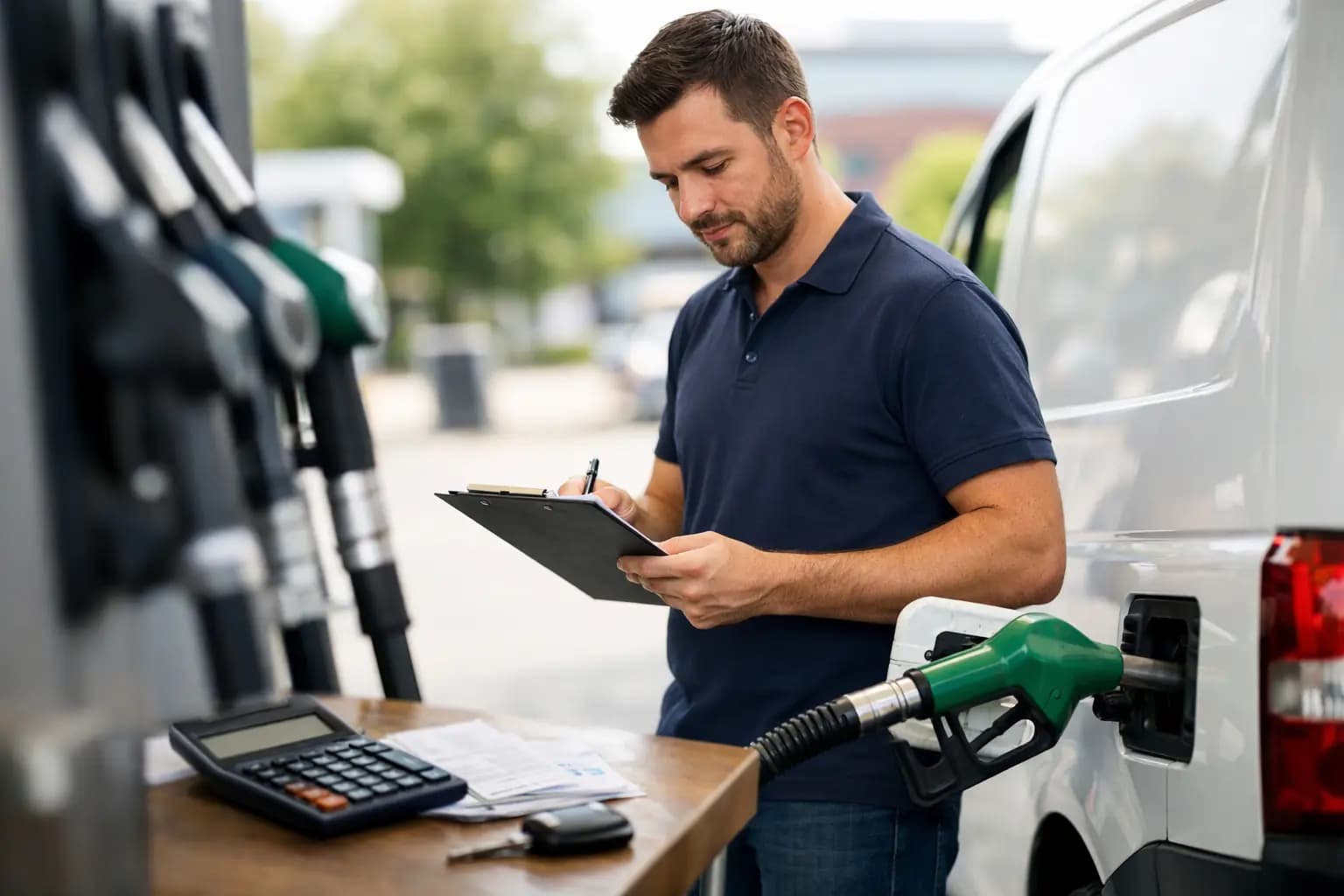
Fuel is one of those costs that quietly eats into profit. A few trips to the merchant, a run across town for a callout, another day driving between jobs - by the end of the month, it adds up fast. So, can sole traders claim fuel? Yes, but only the business part, and the right method depends on how you use your vehicle.
If you are a sole trader in the UK, HMRC does let you claim motoring costs for business travel. The catch is that you cannot just put every petrol or diesel receipt through the business and hope for the best. If the van or car is used privately as well, you need a fair split or you need to use simplified expenses. That is where many people get caught out.
Can sole traders claim fuel for every journey?
No. You can claim fuel for business journeys, not personal ones.
That sounds obvious, but the grey areas matter. Driving from home to a regular place of work is usually treated as ordinary commuting, not business travel. Driving from one job to another, going to a supplier, visiting a customer, or travelling to a temporary site is generally business use. If you are a plumber, electrician or builder working across different locations, plenty of your mileage may be allowable. If you mostly go from home to the same site for months on end, the position can be less generous.
The basic rule is simple enough: if the trip is wholly and exclusively for the business, it is more likely to be claimable. If there is private use mixed in, you cannot claim the private part.
Two main ways to claim fuel as a sole trader
In practice, there are two common ways to deal with fuel costs. You either claim actual vehicle running costs and work out the business-use percentage, or you use HMRC's simplified mileage rates.
1. Claim actual fuel and running costs
With this method, you keep track of what the vehicle really costs to run. That includes fuel, insurance, servicing, repairs, vehicle tax, MOT, and sometimes finance interest if applicable. You then work out what percentage of the vehicle use was for business and claim that share.
So if your annual vehicle costs came to £8,000 and 75% of your mileage was for business, you would normally claim £6,000.
This can work well if your vehicle is expensive to run or does a high amount of business mileage. But it does mean better record keeping. You need receipts, and you need some evidence showing how you arrived at the business-use split.
2. Use simplified expenses mileage rates
HMRC also lets sole traders use a mileage method instead. Rather than claiming actual fuel and other running costs separately, you claim a fixed rate for each business mile.
For cars and goods vehicles, the usual rate is 45p per mile for the first 10,000 business miles in the tax year and 25p per mile after that. For motorcycles, it is 24p per mile.
This method is often the easier option for sole traders who want less admin. You log the business miles, apply the rate, and that figure covers fuel as well as the other running costs included in the allowance. You do not then claim fuel again on top.
That last point matters. You cannot mix methods in a way that gives you both. If you use mileage rates for a vehicle, that rate already covers fuel.
Which fuel claim method is better?
It depends on your vehicle, your mileage and how tidy your records are.
If you do lots of business miles in a fairly economical vehicle, simplified mileage can be straightforward and decent value. If you run a larger vehicle with higher costs, actual expenses may give you a bigger claim. But actual expenses also mean more paperwork and more chance of getting the split wrong.
For tradespeople, the best option is often the one you will actually keep on top of. There is no point chasing the perfect tax position if the receipts live in the van door pocket for six months and the mileage log never gets updated.
Can sole traders claim fuel if they use the same vehicle privately?
Yes, but only the business share.
This is where records matter most. If you use your van or car for both work and personal trips, HMRC expects a reasonable method for splitting the cost. That usually means keeping a mileage log that shows total mileage and business mileage over a period of time.
For example, if you drove 12,000 miles in the year and 9,000 were for business, your business-use percentage would be 75%. If you were claiming actual costs, you would normally apply that percentage to fuel and the other allowable vehicle costs.
If you are using simplified mileage, the private use issue is easier because you only claim the actual business miles.
What counts as a business journey?
This is the bit that causes most arguments. Some journeys are clearly business. Others are not.
Usually claimable journeys include travelling between jobs, going to see customers, visiting suppliers, collecting materials, attending temporary work sites, and driving to the accountant or bank for business reasons.
Usually not claimable are purely private trips and normal commuting to a permanent place of work.
A lot depends on your pattern of work. A carpenter working at changing sites around the region is in a different position from someone travelling to the same site every day for a long contract. If a site starts to look like your regular workplace, HMRC may view the travel differently.
If you are unsure, it is worth being cautious. Aggressive claims on travel are the sort of thing that can unravel quickly if you are ever asked to explain them.
What records do you need to keep?
You do not need fancy systems, but you do need something better than guessing in January.
If you claim actual fuel costs, keep fuel receipts and note enough detail to support your business-use percentage. If you use mileage rates, keep a mileage log showing the date, destination, reason for the trip and miles travelled.
A simple phone-based system usually beats paper because it gets done there and then. That is the real trick. Not accounting exams, just decent records captured while the day is still fresh.
If you use software such as TradeTally, it helps to log expenses and store receipts in one place rather than trying to rebuild the year from glovebox paperwork.
Can sole traders claim fuel for a van and a car?
Yes, potentially for both, as long as they are used for the business and you apply the rules properly to each vehicle.
You need to be consistent with the method used for each one. If you choose mileage rates for a particular vehicle, you generally stick with that method for that vehicle. If another vehicle is claimed using actual costs, keep those records separately so there is no confusion.
This matters for tradespeople who might have a work van but occasionally use a personal car for quotes, urgent supplier runs or smaller visits.
Common mistakes to avoid
The biggest mistake is claiming all fuel with no private adjustment. The second is claiming mileage and fuel receipts for the same vehicle at the same time. The third is having no records to back anything up.
There is also a smaller but common issue: rounding up. If your log is vague, your claim starts to look invented. HMRC does not expect perfection, but it does expect a reasonable basis.
Another trap is assuming every trip from home counts because you are self-employed. It does not. Being a sole trader does not turn ordinary commuting into a business expense.
So, can sole traders claim fuel and stay on the right side of HMRC?
Yes - if the fuel is for business travel, the method is used properly, and the records are there to support it.
For most sole traders, this is less about tax theory and more about habits. Keep the receipt. Log the miles. Separate work from personal use while the journey is still fresh in your head. Do that, and fuel stops being a messy end-of-year guess and becomes a proper business cost you can claim with confidence.
That is usually the difference between saving money and leaving it on the table.
Ready to sort your trade admin?
TradeTally gives UK sole traders invoicing, expenses, and SA103F-ready tax exports in one mobile-first app.
Start 14-day Pro trial →No card required