Xero vs invoice app: which suits sole traders?
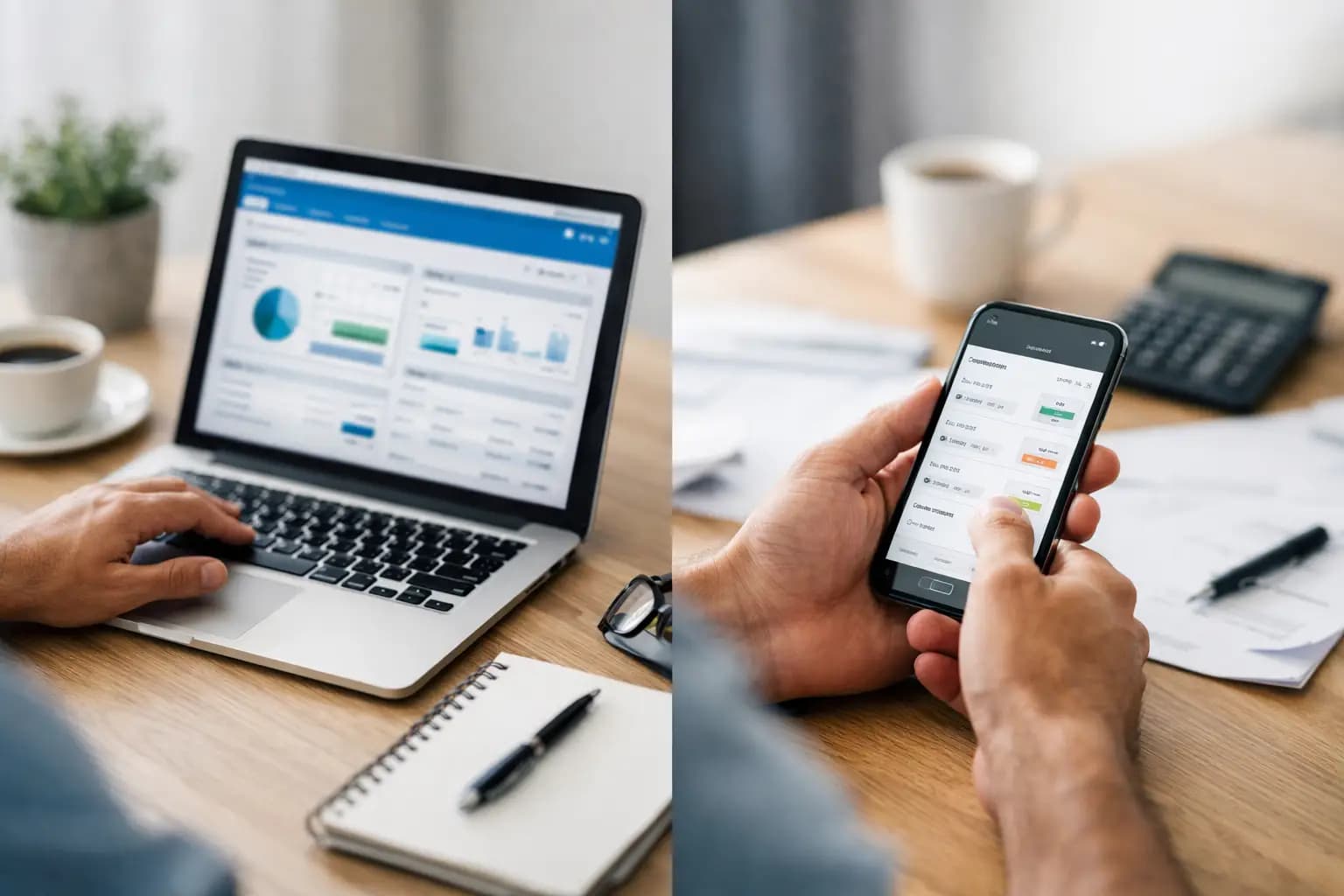
If you are sending invoices from the van between jobs, Xero vs invoice app is not a software debate. It is a time debate. The real question is whether you need a full accounting system with lots of moving parts, or a faster tool that helps you quote, invoice, track expenses and get your tax records sorted without eating your evenings.
For UK sole trader tradespeople, that difference matters more than feature count. A plumber, electrician or builder usually does not need finance-team software. They need to get paid, keep receipts in order, see what is overdue, and have clean records ready for self-assessment. That is where the choice gets clearer.
Xero vs invoice app: what is the real difference?
Xero is accounting software. An invoice app is usually a lighter tool built around billing, expenses and day-to-day admin. Those sound similar on paper, but they solve different problems.
Xero is designed to cover broad business accounting needs. That includes bank reconciliation, reporting, payroll options, VAT tools, and deeper bookkeeping workflows. If you have a limited company, a bookkeeper involved every month, staff on payroll, or more complex accounts, that breadth can be useful.
An invoice app is narrower by design. That is not a weakness. For a sole trader on the tools, it is often the point. You want to create and send invoices quickly, chase payment without hassle, photograph receipts on the spot, track what has been paid, and export figures for tax time. If the app does those jobs well on mobile, it may fit your working day better than a full accounts package.
Why this choice matters more for trades than for office businesses
A lot of software comparisons ignore how trade businesses actually run. Most sole traders are not sat at a desk at 3pm tweaking chart-of-accounts settings. They are on a job, at the merchants, driving to the next callout, or trying to get home before the kids are in bed.
That changes what good software looks like. Speed matters. Mobile use matters. Simplicity matters. If something takes six taps instead of two, you feel it every day. If invoicing gets delayed until Friday night because the system feels like hard work, cash flow suffers.
The best option is usually the one you will actually use properly. That means honest trade-offs, not just the longest feature list.
Cost: the difference is not just monthly price
At first glance, Xero vs invoice app often comes down to subscription cost. But that is only half the story.
Xero generally costs more because it does more. That may be fine if you genuinely need those extra accounting functions. But paying for features you rarely touch is dead money, especially if margins are under pressure and every software bill adds up.
There is also the time cost. If a platform is more complex, setup takes longer. Everyday tasks can take longer too. You might end up relying more heavily on an accountant or bookkeeper just to keep everything tidy. Again, that can be worth it for some businesses. It is less attractive if you are a sole trader who mainly wants admin out of the way.
A simpler invoice app can be cheaper to buy and cheaper to run because it asks less of your time. For many tradespeople, that is the stronger saving.
Ease of use on site
This is where many broad accounting platforms lose sole traders.
Xero is capable, but it was not built first and foremost around muddy boots, one-handed phone use, patchy signal and ten spare minutes in the cab. It can absolutely be used on mobile, but the overall experience still makes more sense when you are thinking like an accountant.
A good invoice app should feel quicker from the start. Create a quote while standing in a customer’s kitchen. Turn it into an invoice when the job is done. Snap a fuel receipt before it disappears into the van door pocket. Check what is overdue while waiting at the trade counter.
That kind of flow matters because admin only works when it fits the day you actually have, not the day a software company imagines.
Invoicing and getting paid
If your main pain point is slow invoicing, the comparison shifts quickly.
Xero includes invoicing, and for many businesses it does the job well. But invoicing is one part of a wider accounting system. The experience can feel tied into bigger bookkeeping workflows.
An invoice app puts invoicing front and centre. That usually means faster creation, clearer customer records, easier status tracking and less clutter around the task. For sole traders, that is not cosmetic. Sending invoices promptly has a direct effect on cash flow.
It also helps if you can see your invoice pipeline at a glance. What has been drafted, sent, viewed, paid or chased? If that picture is easy to read on a phone, you spend less time wondering where the money is.
Expenses and receipts
Tradespeople collect expenses constantly - fuel, materials, parking, tools, bits from the merchants. The challenge is not whether software can log expenses. Most can. The challenge is whether you will keep on top of it in real life.
Xero can handle expense tracking, but again, it sits inside a broader accounting environment. For users comfortable with bookkeeping, that is manageable. For someone who hates paperwork, it can feel heavier than needed.
A focused invoice app often makes receipt capture and expense logging more immediate. Take the photo, save the cost, move on. That is the level of friction you want. The easier it is, the less likely you are to end up with a pile of faded receipts in the glovebox and a rough guess at tax time.
Tax and compliance for UK sole traders
This is one area where people sometimes assume full accounting software must be better. Not always.
If you are a sole trader, your goal is usually straightforward: keep accurate records and export the right figures for self-assessment. You do not necessarily need deep accounting reports to achieve that. You need clean income and expense records, organised categories, and a reliable way to hand things over when needed.
Xero can support this, but it may be more system than you need if you are not running a more complex business structure.
A purpose-built invoice app for sole traders can be the smarter fit if it supports UK tax admin properly, especially if it gives you clear exports aligned to self-assessment needs. That is enough for many one-person trade businesses. Not accounting exams. Just records that make sense when HMRC comes calling.
When Xero makes sense
There are cases where Xero is the right call.
If your business is growing beyond straightforward sole trader admin, if you need fuller accounting visibility, if your accountant prefers working in Xero every month, or if you are dealing with payroll, VAT complexity or more formal bookkeeping processes, the extra depth may justify the extra cost and complexity.
It can also suit business owners who do not mind spending more time learning the system, because they want tighter control over wider financial reporting.
That is a fair choice. It is just not automatically the best choice for every self-employed tradesperson.
When an invoice app is the better fit
For many site-based sole traders, an invoice app wins because it lines up with the actual job.
If your priorities are sending invoices fast, tracking payments, logging expenses as they happen, producing quotes on mobile and keeping self-assessment records tidy, a simpler tool is often the better fit. You get less software to wrestle with and more chance of staying consistent.
That is especially true if you work alone, have short evenings, and want one place to run the practical side of admin without being dragged into full bookkeeping language.
This is exactly why tools built around sole trader trades exist. TradeTally, for example, focuses on the jobs most on-site professionals actually need to do from a phone, without loading the product up with accounting features that belong in a different kind of business.
The better question than Xero vs invoice app
Instead of asking which platform is more powerful, ask which one matches your week.
If you spend most of your time on site and your admin needs are quoting, invoicing, expenses and tax prep, simpler is often better. If your business has moved into deeper accounts management, broader accounting software may earn its keep.
The right tool is not the one with the biggest feature list. It is the one that helps you finish the day with less paperwork hanging over you and more control over what you have earned. That is usually the software worth paying for.
Ready to sort your trade admin?
TradeTally gives UK sole traders invoicing, expenses, and SA103F-ready tax exports in one mobile-first app.
Start 14-day Pro trial →No card required