Bookkeeper or Admin App for Sole Traders?
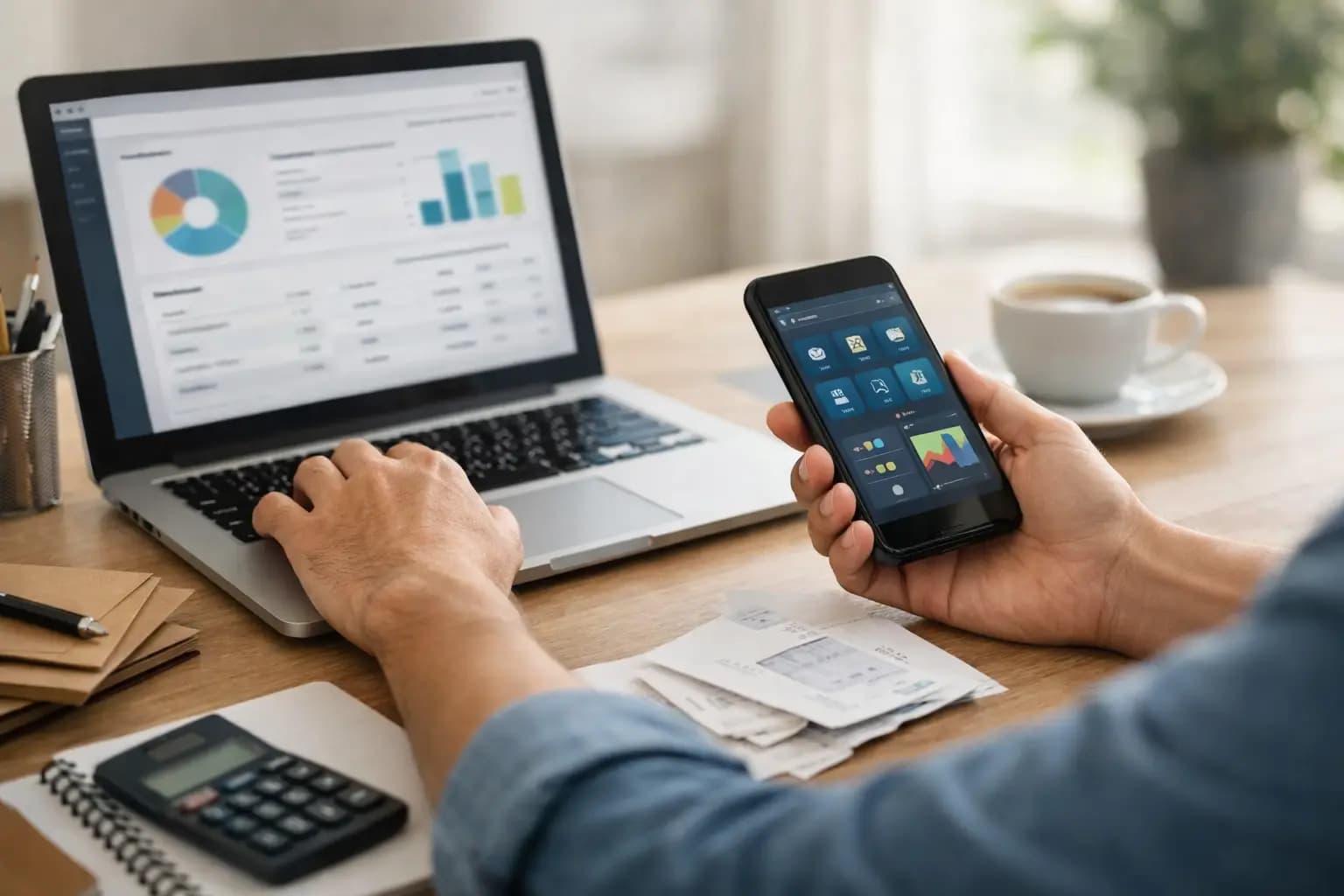
If you are finishing a job at half six, covered in dust, with two receipts in your pocket and three unpaid invoices in your head, the question is not theoretical. Bookkeeper or admin app is a real choice for sole traders, because both cost money and both promise to sort the paperwork. The right answer depends on what is actually slowing you down.
For most tradespeople, the biggest admin problems are not year-end tax returns. They are everyday hold-ups: invoices sent late, receipts lost in the van, no clear view of what is overdue, and that Sunday-night feeling that you should be more on top of the numbers. That is where the difference between a person and an app matters.
Bookkeeper or admin app: what problem are you solving?
A lot of sole traders ask the wrong first question. They ask which option is more professional, or which one is cheaper. A better question is this: what work do you need taken off your plate, and what work still needs doing on the day?
A bookkeeper is useful when records need tidying, checking and categorising properly. They bring oversight. They can spot gaps, sense-check figures and often keep you from making avoidable mistakes. If your paperwork is already piling up in bags, folders and glove boxes, a good bookkeeper can save a lot of grief.
An admin app solves a different problem. It helps you do the small jobs while the details are fresh. Send the invoice before you leave site. Photograph the receipt at the merchant. Check who has paid while you are waiting for materials. Quote from your phone between jobs. That is less about finance expertise and more about keeping the wheels turning.
For a lot of sole traders, that daily friction is the bigger issue. The records are not bad because they are complicated. They are bad because there is never a good time to do them later.
Where a bookkeeper earns their keep
There are jobs an app will not replace. If your records are messy, your expenses are mixed up, or you are unsure what should and should not be claimed, a bookkeeper can be worth every penny. They can help clean up historic records, prepare figures properly and reduce the chance of nonsense creeping into your self-assessment.
That matters even more if your business is growing. Once you have subcontractor costs, regular material purchases, lots of customer jobs running at once, or separate bank accounts and payment methods, the checking side becomes more important. A bookkeeper also gives some people accountability. If someone is expecting your records each month, you are less likely to ignore them.
There is also the plain fact that some people hate admin so much they will not do it even with a simple app. If that is you, honesty helps. A cheaper tool is not better value if you still avoid using it.
But there is a trade-off. A bookkeeper usually works after the event. They can process what happened last month. They do not usually stand next to you on site reminding you to invoice today, save that receipt now or chase an overdue payment before it becomes awkward.
Where an admin app makes more sense
If your main issue is speed, not complexity, an admin app is often the better fit. Most sole trader trades do not need a full back-office setup. They need a fast way to quote, invoice, track expenses and keep enough order in the records to make tax time less painful.
That is why mobile-first tools suit site-based work better than broad accounting systems built around office use. You are not sitting at a desk for two hours every afternoon. You are in a van, on a ladder, at a supplier or grabbing ten minutes between jobs. The admin has to fit around that reality.
A good app helps because it cuts delay. Delay is where most admin problems start. A job gets finished, but the invoice waits. A receipt gets stuffed in a pocket, then washed or lost. An expense gets forgotten. By the end of the month, nothing matches your memory and the tidy-up takes three times longer.
If an app lets you handle those jobs in the moment, it stops the backlog before it starts. That is not glamorous. It is just practical.
Bookkeeper or admin app for invoicing and cash flow
This is the clearest split.
A bookkeeper can record invoices and reconcile payments, but they are not usually the tool you reach for when you have just finished fitting a bathroom and want to bill the customer before driving off. An admin app is stronger here because speed affects cash flow directly.
Tradespeople do not usually run into cash flow trouble because they cannot read a profit and loss report. They run into it because money comes in later than expected, materials need paying for now, and nobody has a clean view of what is due. If invoices go out late, everything shifts back.
That makes an admin app especially useful if you want branded invoices, a clear unpaid and paid pipeline, and a quick way to chase what is overdue. For sole traders, that kind of visibility is not a luxury. It is how you avoid finding out too late that three decent-sized jobs are still sitting unpaid.
Expenses and receipts: the boring part that causes the mess
Receipts are where good intentions go to die. Everyone plans to sort them later. Hardly anyone enjoys doing it.
This is one area where an app often beats a bookkeeper, not because the bookkeeper is less skilled, but because the evidence needs capturing when it happens. If you buy fittings at the merchant and do not record them until three weeks later, there is already a problem. The receipt may be gone, the amount may be misremembered, and the job it related to may be harder to identify.
A phone-based admin app makes that easier because the capture happens on the spot. Take the photo, log the expense, move on. Later on, if you work with a bookkeeper as well, the records are cleaner from the start.
That is the point many people miss. It is not always bookkeeper versus app. Sometimes the best setup is the app for day-to-day discipline and the bookkeeper for review and year-end confidence.
Tax prep is not the same as daily admin
Plenty of sole traders only think about admin when self-assessment is looming. That is understandable, but it creates the wrong buying decision.
If you choose a bookkeeper purely because tax feels stressful, you may still be left with the same monthly chaos. If you choose an app purely because it is cheaper, you may still need expert help to make sure everything has been treated properly.
The useful question is whether your records are being created properly through the year. If they are, tax prep gets easier. If they are not, tax prep becomes a repair job.
That is where a simple app built for sole traders can do a lot of heavy lifting. If it keeps invoices, expenses and income in one place and gives you exports that make self-assessment easier, it removes a big chunk of the scramble. Tools like TradeTally are built around that middle ground - not accounting exams, just the core jobs done properly and fast.
So which one should you choose?
If your business is fairly straightforward, you work mostly alone, and your main pain is getting admin done on time, start with an app. It will probably give you more day-to-day value than paying someone to process a backlog after it has already formed.
If your books are already untidy, your business is getting more complex, or you want somebody to review the numbers and keep things accurate, a bookkeeper may be the better first move. Paying for expertise is sensible when the cost of getting it wrong is higher than the fee.
And if you are somewhere in the middle, use both, but for different reasons. Let the app handle the work that happens in real life, in real time. Let the bookkeeper handle the checking, corrections and confidence.
That is usually the most grounded answer. Sole traders do not need more complexity. They need fewer loose ends, faster invoices, cleaner records and less admin stealing their evenings. Choose the option that fixes the bottleneck you actually have, not the one that sounds more official.
Ready to sort your trade admin?
TradeTally gives UK sole traders invoicing, expenses, and SA103F-ready tax exports in one mobile-first app.
Start 14-day Pro trial →No card required