Best electrician invoice app UK choices
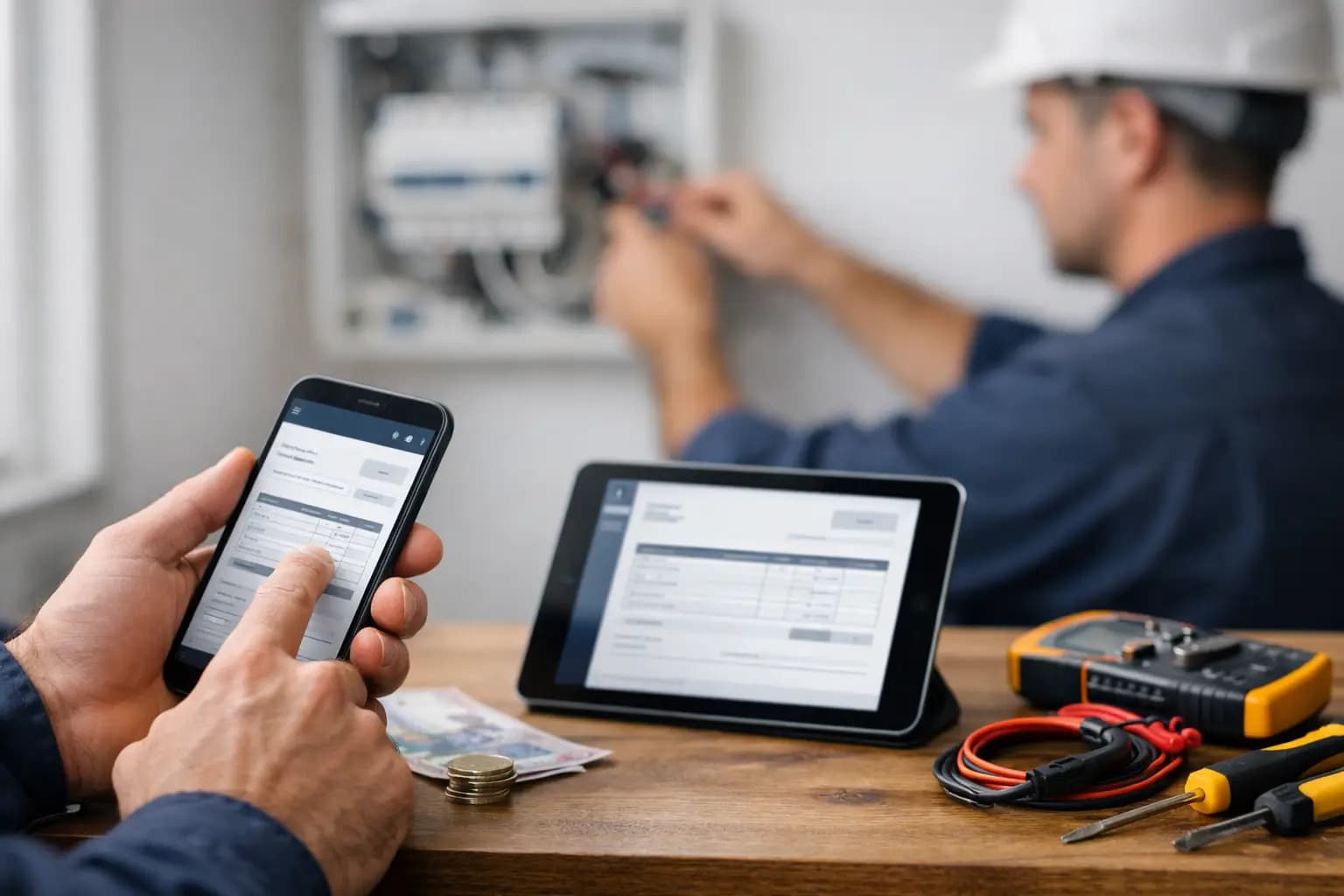
If you are still sending invoices at 9.30pm from the sofa, after a full day on site, the problem is not your work rate. It is your setup. The right electrician invoice app UK sole traders use should let you price the job, send the invoice, track what is owed and keep records for tax without turning your evenings into admin shifts.
That matters more for electricians than most. You are often moving between call-outs, testing, remedials, installs and supplier runs. Paperwork gets left until later because the actual work comes first. Then later becomes the weekend, and cash flow starts lagging behind the work already done.
What an electrician invoice app UK users actually need
A lot of invoicing software looks fine in a demo and feels painful in real life. That is usually because it was built for desks, not vans. Electricians do not need ten menus, accounting jargon and reports they will never look at. They need to get an invoice out quickly, know whether it has been paid, and keep clean records without double entry.
A useful app should handle the whole job admin chain in a simple way. That usually means creating quotes, turning approved quotes into invoices, adding materials and labour clearly, and checking outstanding payments without hunting through tabs. If it also lets you capture receipts and sort expenses while you are still on the move, even better.
The tax side matters too. Sole traders do not just need invoices. They need records that make self-assessment less painful. If your app helps you stay organised through the year and gives you a clean export when tax time comes round, that is real value. Not flashy value. Actual saved hours.
Why electricians outgrow basic invoicing methods
There is nothing wrong with starting with Word, notes on your mobile phone or a free template. The issue comes when the volume goes up. Once you are juggling deposit invoices, part payments, certificates to send, supplier receipts and a few late payers, the cracks show quickly.
Manual systems are slow in small ways that add up. You rewrite the same customer details. You forget whether invoice 148 was sent. You cannot remember what materials went on which job. You leave receipts in the van door pocket. None of that feels dramatic on its own, but together it drags on cash flow and makes tax prep harder than it needs to be.
For electricians doing domestic and small commercial work, speed matters. The faster you invoice, the faster the payment cycle starts. If you finish a consumer unit change, snag a quick signature and send the invoice before you drive off, that is far better than planning to do it later and losing another two days.
The features worth paying for
An electrician invoice app does not need to do everything. It needs to do the right things properly.
First, invoice creation needs to be quick on mobile. That sounds obvious, but plenty of software still feels clunky on a mobile phone. If you are pinching the screen, editing tiny fields or waiting for pages to load, it will not stick. You want something built for one-handed use between jobs, not accounting exams.
Second, quoting should connect cleanly to invoicing. Electricians often quote for planned work, then invoice once the job is complete or once a stage is signed off. If you have to rebuild the invoice from scratch every time, that is wasted effort and more room for errors.
Third, payment visibility is non-negotiable. You need to see what is paid, overdue or still awaiting a response. Chasing money is easier when the information is obvious. It is harder when you have invoices in one place, bank checks in another and text reminders in your head.
Fourth, expense capture is more useful than many sole traders realise. Electrical work involves regular spend on materials, fuel, tools and bits picked up from merchants. If those receipts get stored as you go, your records stay current. If not, you end up rebuilding the year from faded paper and card statements.
Finally, look at tax export. A lot of apps promise bookkeeping support, but for a sole trader the real question is simpler: will this help me prepare accurate self-assessment figures without a load of rework? If yes, good. If not, it is probably adding less value than it claims.
What to watch out for when comparing apps
The biggest trap is paying for complexity you do not need. Some accounting platforms are powerful, but they are often built for broader businesses with payroll, stock, multiple users and finance workflows that most sole traders do not need day to day. If you spend more time learning the software than using it, it is the wrong fit.
The second trap is choosing on feature count alone. More features do not always mean a better app for an electrician. They can just mean more clutter. A simpler product that covers invoicing, expenses, quoting and tax records well is often more useful than a bigger system with twenty extra modules.
Then there is price. Cost matters, especially when software is one more monthly outgoing on top of fuel, tools, insurance and van costs. But cheapest is not always cheapest in practice. If a cheap app causes delayed invoicing, missed expenses or extra accountant cleanup, it can cost more than a straightforward paid tool that keeps things tidy.
Support and setup also matter. If the app takes ages to configure, asks for card details before you have even tried it, or assumes you already speak accounting, expect drop-off. Most tradespeople want to test it quickly and know within a week whether it fits their routine.
The best fit depends on how you work
There is no single best electrician invoice app UK-wide for every sole trader. It depends on the type of work you do and how much admin you want the software to carry.
If most of your jobs are quick domestic call-outs, speed from mobile phone matters above all else. You want customer details saved, common line items ready to use and a clear paid or unpaid view. Fancy reports are less relevant.
If you do bigger installs or staged work, quoting and invoice conversion become more important. You may need deposits, progress invoices and a better record of what was agreed before the work started.
If your main headache is year-end paperwork, focus on expenses and tax-ready exports. A slick invoice tool on its own will not solve the bigger issue if all your costs are still living in a pile of receipts and half-remembered purchases.
That is where a purpose-built tool can make more sense than broad accounting software. TradeTally, for example, is aimed at sole trader tradespeople who need invoicing, expenses, quotes and self-assessment support in one mobile-first setup. That is a different promise from a full finance platform, and for a lot of electricians that narrower focus is exactly the point.
How to choose without wasting a week
Start with your actual pain point, not the software advert. If getting invoices out late is the problem, test how quickly you can create and send one from your mobile phone. If tax admin is the pain, trial the receipt capture and expense workflow first.
Use a real job when testing. Add a customer, build a quote or invoice, attach the kind of detail you normally include, then check how easy it is to find later. If it feels slow in that first test, it will feel worse when you are busy.
Also check whether the app gives you confidence at a glance. Can you see what is owed? Can you tell what has been paid? Can you spot missing records before they become a problem? Good software reduces mental clutter as much as paperwork.
And be honest about your own habits. If you know you are not going to sit at a laptop every evening, choose something designed properly for mobile. If you want to keep things lean and avoid a long setup, do not buy into a system built for firms with office staff and bookkeepers.
A good app should get out of the way
The best electrician invoice app UK sole traders use is not the one with the biggest dashboard or the longest feature page. It is the one that fits the way you already work, gets invoices out faster, keeps expenses under control and helps you stay ready for tax without turning admin into a second job.
You are not trying to become an accountant. You are trying to get paid properly, keep clean records and keep your evenings. Choose the app that makes that easier, then get back to the work that actually earns the money.
Ready to sort your trade admin?
TradeTally gives UK sole traders invoicing, expenses, and SA103F-ready tax exports in one mobile-first app.
Start 14-day Pro trial →No card required