Simple Bookkeeping App for Tradespeople
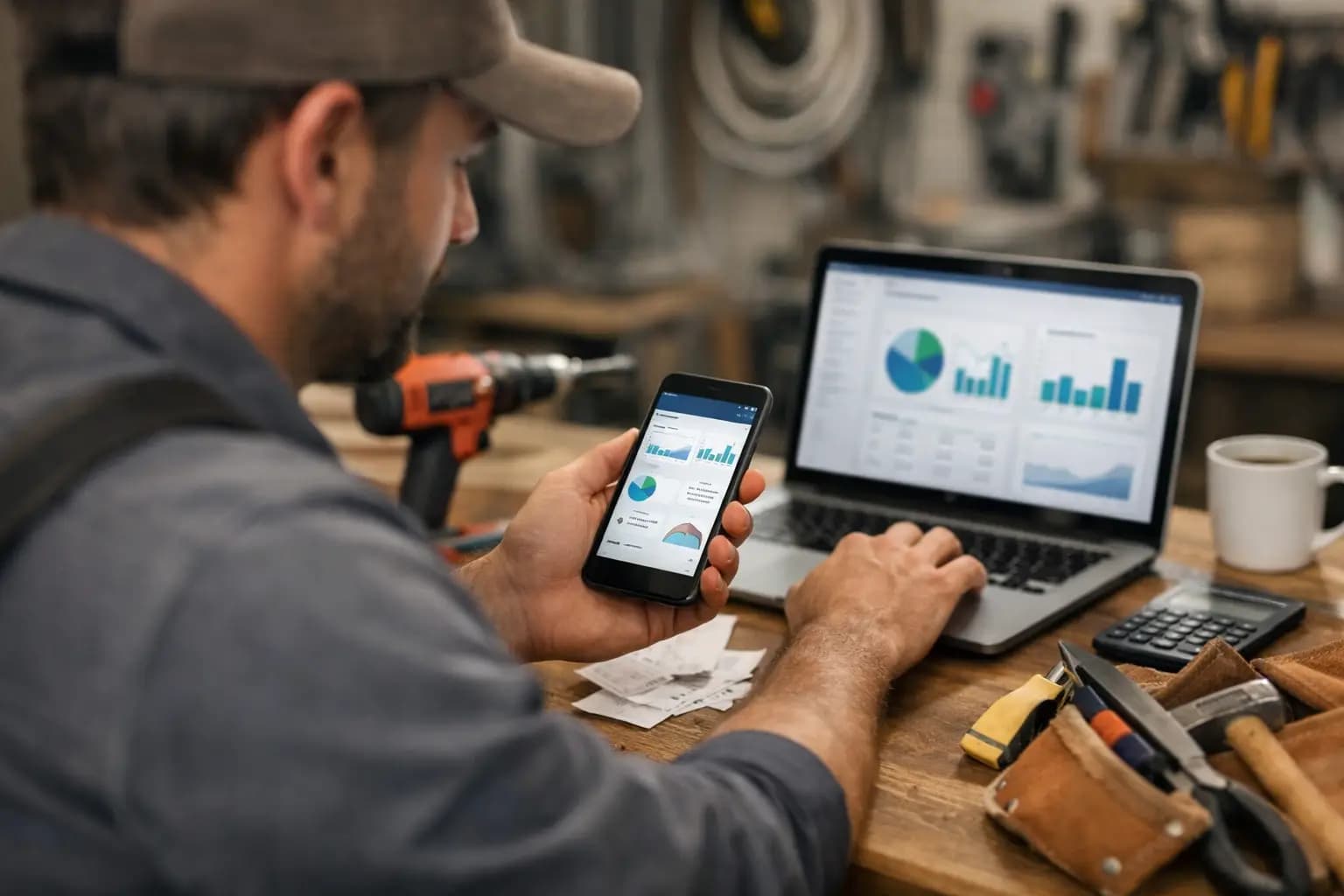
Half nine at night, boots still by the door, and you are sorting crumpled receipts on the kitchen table. That is usually the moment a simple bookkeeping app for tradespeople starts to make sense. Not because bookkeeping is exciting, but because most sole traders have better things to do than chase paper, rebuild job records from memory, or work out which customer still has not paid.
For plumbers, electricians, builders, carpenters and other on-site trades, admin has to fit around real work. It happens in the van, between jobs, at the merchant, or in short bursts after tea. That is why general accounting software often feels like overkill. Too many menus, too many accounting terms, too much setup. If you are a sole trader, you do not need software built for finance teams. You need something that gets invoices out, keeps expenses tidy, shows what is owed, and gives you what you need for tax.
What a simple bookkeeping app for tradespeople should actually do
Simple does not mean basic in a bad way. It means cutting out the bits that waste your time.
A good app for a tradesperson should let you create and send quotes quickly, turn those quotes into invoices without retyping everything, and keep a clear view of what has been paid and what is overdue. It should also make expense tracking easy enough that you actually use it. If you have to save receipts in a drawer and deal with them months later, the system has already failed.
The other part is tax. Most sole traders are not looking for full-blown accounting software with every report under the sun. They want clean records and a straightforward export for self-assessment. That is the real test. If an app helps you stay on top of the year as you go, January becomes far less grim.
Why tradespeople need something different from standard accounting software
Most software in this category is built as if the user sits at a desk all day. Tradespeople do not. You are quoting on the go, buying materials on the fly, taking calls while driving between jobs, and trying to finish paperwork when energy is already gone.
That changes what matters. Mobile-first design is not a nice extra. It is the main thing. If the app works properly on your phone, you will use it. If it expects spreadsheets, detailed bookkeeping knowledge, or a long setup process, it will end up ignored.
There is also the question of cost. A sole trader does not always need the breadth of a large accounting platform, especially if they are mainly trying to manage invoicing, expenses and tax records. Paying for features you will never touch is not efficient. A simpler app can often do the job better because it is focused.
That said, it depends on how your business runs. If you employ a team, need payroll, or have complex VAT and reporting needs, broader software may be worth it. But for many one-person trade businesses, simpler is not a compromise. It is the better fit.
The jobs that matter most day to day
When tradespeople say they hate bookkeeping, they usually mean four things.
First, invoicing gets delayed. You finish the work, mean to send the invoice that evening, then a few days pass and cash flow slows down for no good reason. Second, expenses build up in pockets, glove boxes and WhatsApp photos. Third, no one has a clean picture of what money is due in and when. Fourth, tax prep turns into a catch-up exercise because records are spread across notebooks, bank statements and old emails.
A simple app should deal with those jobs in the order they affect your business. Speed up the invoice. Capture the receipt there and then. Keep a visible pipeline of what is outstanding. Store everything in one place so self-assessment is based on records, not guesswork.
What to look for before you choose one
Start with the obvious question: will this save time on a normal working day?
That means fast invoice creation, not a long chain of screens. It means branded paperwork that looks professional without needing a designer. It means receipt capture from your phone, because no one is carrying paperwork back to a home office in perfect order. It also means seeing unpaid invoices clearly, so chasing payment is easier and less awkward.
Then look at whether the app matches the way sole traders work in the UK. Self-assessment support matters. Clear expense categories matter. Pricing matters too. If the monthly cost creeps up with add-ons, the value starts to disappear.
You should also check how much accounting knowledge the app assumes. If it is full of terms you would never use on site, that is a warning sign. Good software for tradespeople should feel like a work tool, not an accounting exam.
Where simple can go wrong
Not every simple app is genuinely useful. Some are simple because they do very little. There is a difference.
If an app can send an invoice but gives you no way to track expenses properly, you will still end up doing half the job elsewhere. If it stores receipts but offers no clear export for tax, you have only delayed the pain. If it looks clean but cannot show what has been paid, overdue or quoted, it is missing the practical stuff that keeps a business moving.
The best option is not the one with the fewest features. It is the one with the right features and none of the clutter. For a sole trader in the trades, that usually means quoting, invoicing, expense capture, payment visibility and self-assessment-ready records in one place.
A realistic comparison with broader accounting platforms
This is where a lot of tradespeople get stuck. They assume serious business software has to be big, expensive and packed with functions. Sometimes that is true. Often it is not.
Broader accounting platforms can be strong if your business is more complex. They may cover payroll, stock, deeper reporting and accountant-led workflows. But many sole traders use a fraction of that while still paying for the lot. The result is a clunky routine where simple admin takes longer than it should.
A purpose-built option for sole trader tradespeople tends to be better when speed matters more than complexity. If your week is built around site work, not office work, the right app should help you quote quickly, invoice before you forget, log expenses as they happen and keep tax records straight without dragging you into full accounting processes.
That is the gap a tool like TradeTally is built to fill. It focuses on the essentials tradespeople actually use, keeps everything mobile-first, and avoids loading the job with finance-heavy extras that do not help you get home any earlier.
Signs you are ready to switch
If invoices regularly go out days after a job is finished, you are ready. If receipts are scattered around the van, you are ready. If you cannot say with confidence which customers owe money, you are ready. If self-assessment means a yearly scramble, you are definitely ready.
The switch is not about becoming more corporate. It is about removing repeat friction. A few minutes saved after each job adds up fast over a month. Better visibility over unpaid invoices can tighten cash flow without taking on more work. And cleaner expense records can stop you missing legitimate costs when tax time comes around.
The best app is the one you will actually use
This is the part people miss. The perfect feature list means nothing if the app is a pain to open and use.
Tradespeople need something quick enough to use on a phone with one hand, clear enough to understand at a glance, and focused enough that it does not bury simple tasks under accounting jargon. If it helps you do admin in the gaps of a real working day, it has value. If it expects a quiet hour at a desk, it probably does not.
A simple bookkeeping app for tradespeople should feel built for vans, sites, and short evenings. It should help you get paid faster, keep hold of your expenses, and make tax less of a mess. If it does that without costing a fortune or asking you to think like an accountant, it is doing its job.
Good bookkeeping software should not become another job on the list. It should quietly take one off it.
Ready to sort your trade admin?
TradeTally gives UK sole traders invoicing, expenses, and SA103F-ready tax exports in one mobile-first app.
Start 14-day Pro trial →No card required